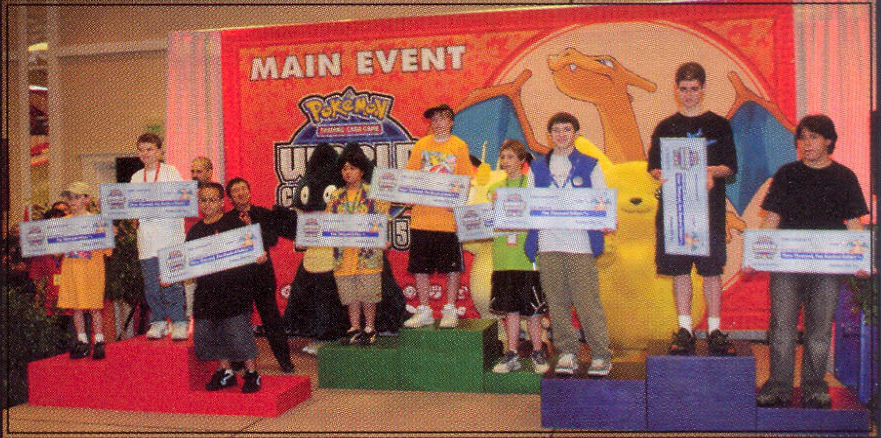


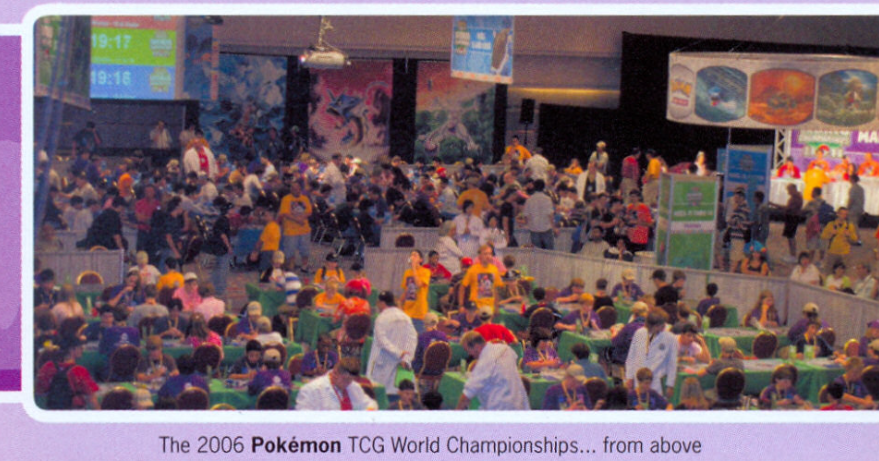
The 2006 Pokémon World Championships was an invite-only competitive event held in Anaheim, California, showcasing the world’s top players of the Pokémon Trading Card Game (TCG). The tournament took place at the Hilton Anaheim from August 18–20, 2006. It was organized by Play! Pokémon (then known as Pokémon Organized Play) and was the third annual World Championships event for the TCG, succeeding the 2005 World Championships.
Although an official Video Game World Championships did not yet exist in 2006, the year’s major video game tournament was the Pokémon Journey Across America (JAA) 2006 National Championships, held as part of Pokémon’s 10th Anniversary celebration. This event took place on August 8, 2006, at Bryant Park in New York City – just a week before the TCG Worlds in Anaheim.
Qualification
A total of 362 players from over 30 countries qualified to compete in three age divisions. Qualification paths changed depending on the players’ region.
In all regions, POP also awarded Worlds seats based on end-of-season Premier Ratings (Elo) and “ranking” alongside the event-based invites.
North America (U.S., Canada, Mexico)
- Gym Challenges (spring/summer 2006):
Winner of each age group (10−, 11–14, 15+) earned a Worlds invitation. - U.S. National Championships (Columbus, OH – July 1, 2006):
Top 8 in 11–14 and 15+ and Top 16 in 10− received Worlds invitations. (Travel awards for U.S. residents were tied to these placements.) - Canadian & Mexican Nationals:
Top 4 in each age group received Worlds invitations.
Europe, Latin America, and Oceania
- National Championships:
In “participating countries” outside North America, the Top 4 of each age group at Nationals earned Worlds invitations. (One travel award per age group, typically to the champion.) - Gym Challenges (or local equivalents run by POP partners):
Top 4 of each age group earned Worlds invitations. (One travel award per age group, typically to the winner.)
Japan
- Battle Road Spring & Summer 2006 served as Japan’s domestic qualifying path (TPC ran Battle Road instead of POP’s Gym/Nationals structure). Entrants registered by lottery, then advanced through regional events; top finishers from this circuit earned Worlds invites allocated to Japan.
Last Chance Qualifier (LCQ)
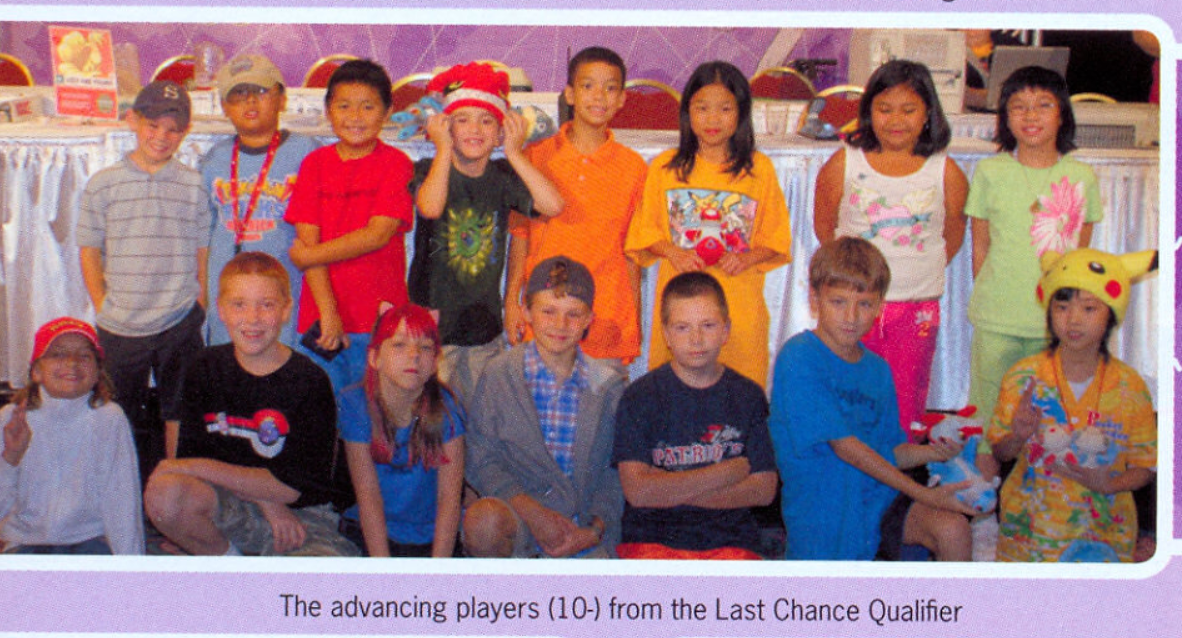
On Friday Aug 18, 2006 at the Anaheim venue, there was a single-elimination “Grinder” that awarded Worlds invites to attendees from any region.
- Juniors (Under 10): 16 invites
- Seniors (11-14): 8 invites
- Masters (15+): 8 invites
Participation Gifts & Merchandise
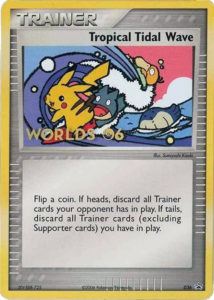
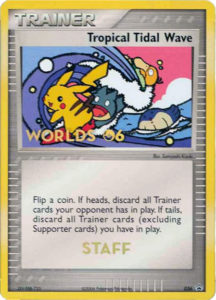
All players who qualified for the tournament received a complete language set of Tropical Tidal Wave with the event’s stamp.
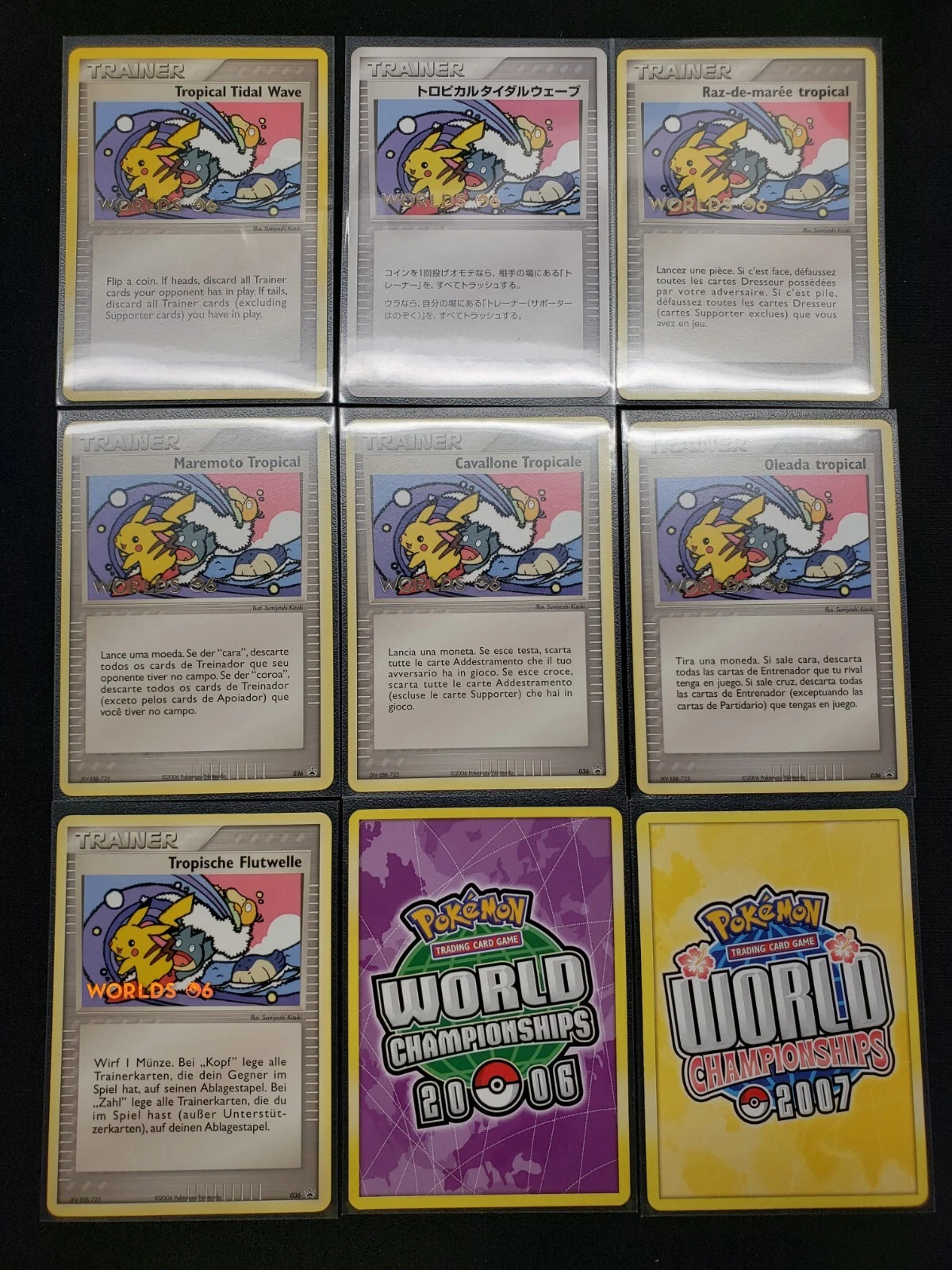
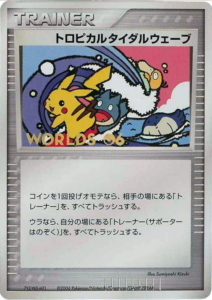
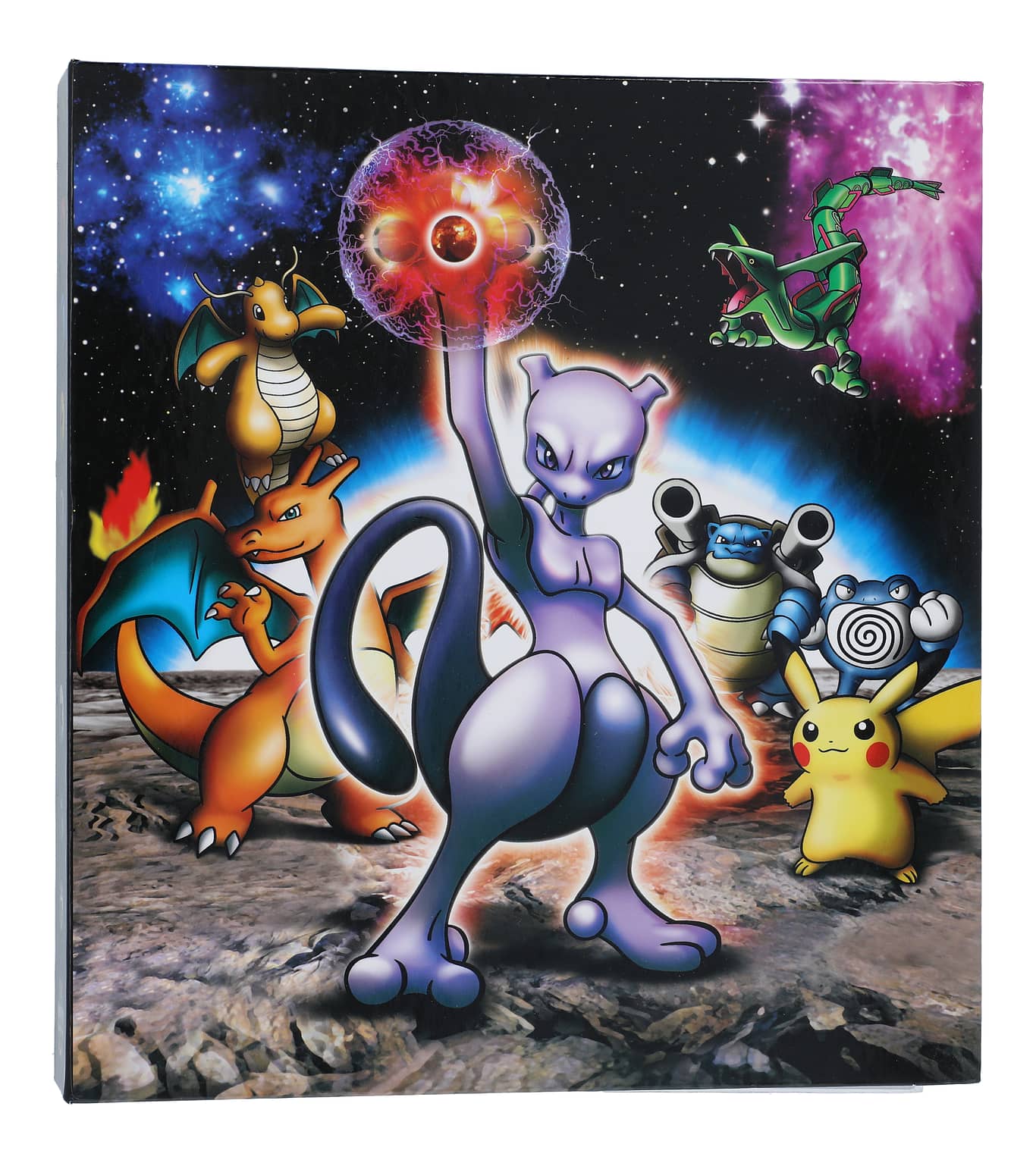
The language sets were distributed in binders with the Worlds 2006 key art, which were also available for sale at the venue.
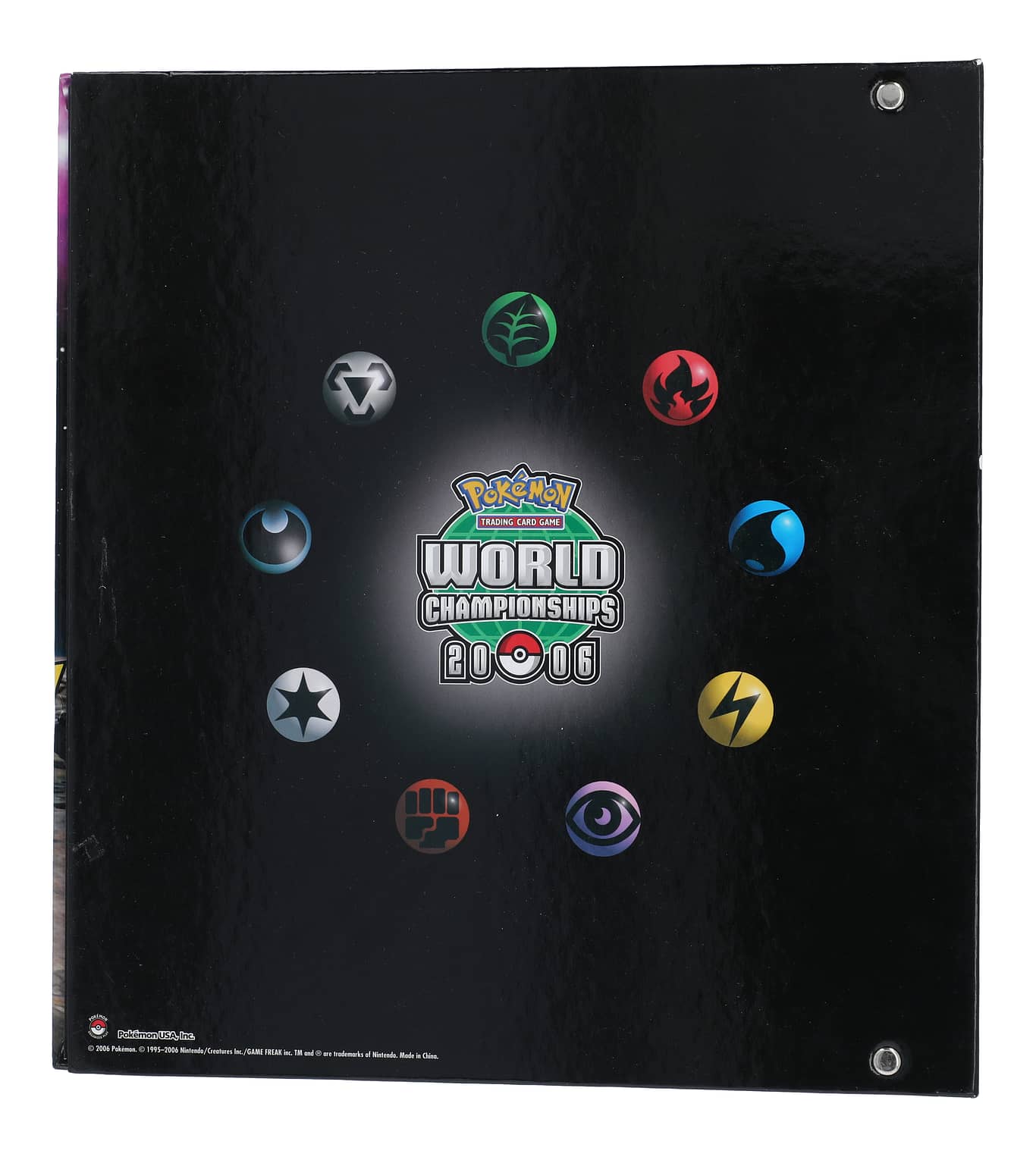
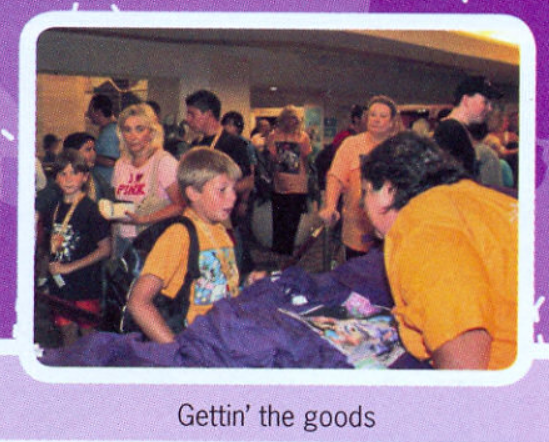
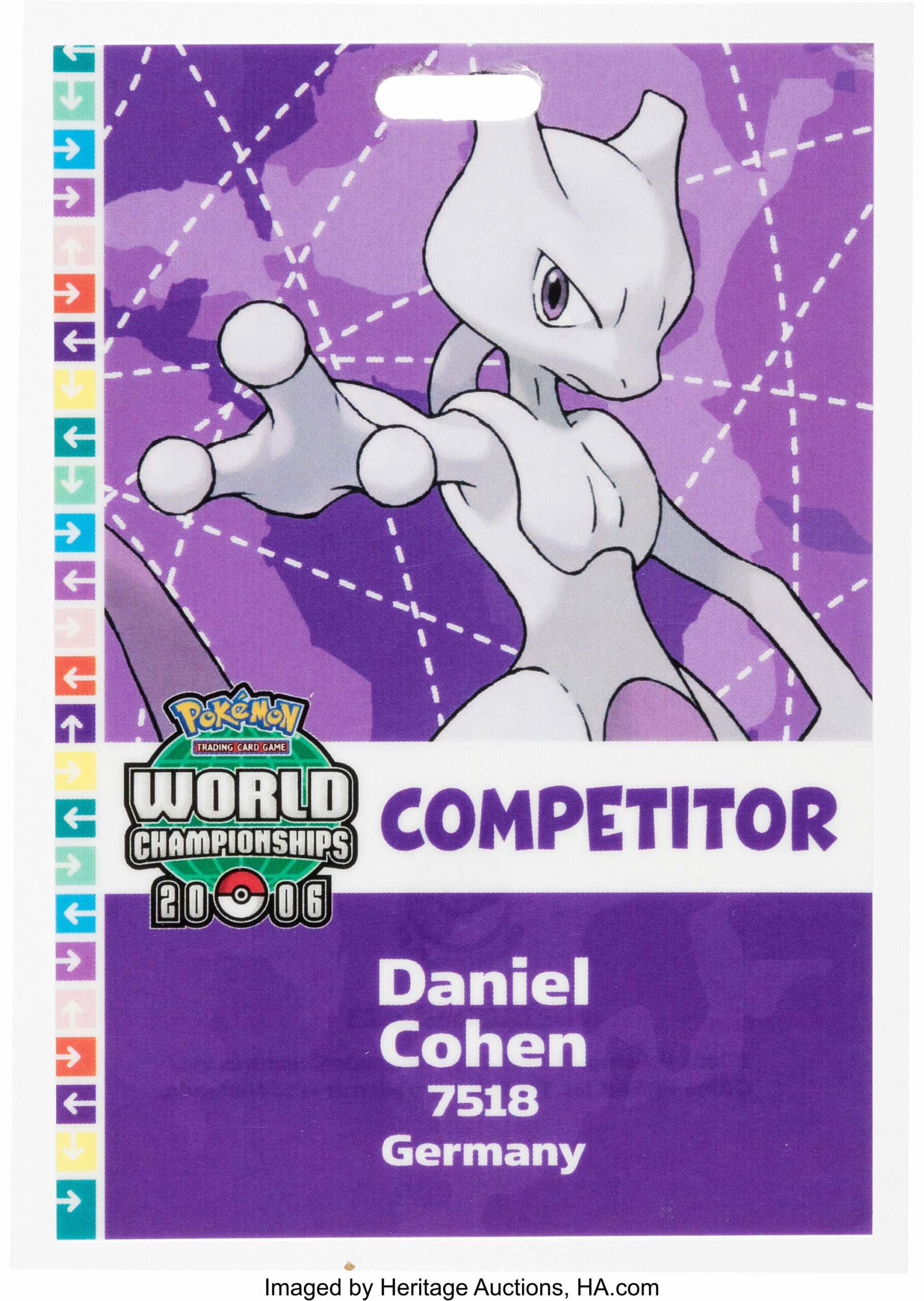
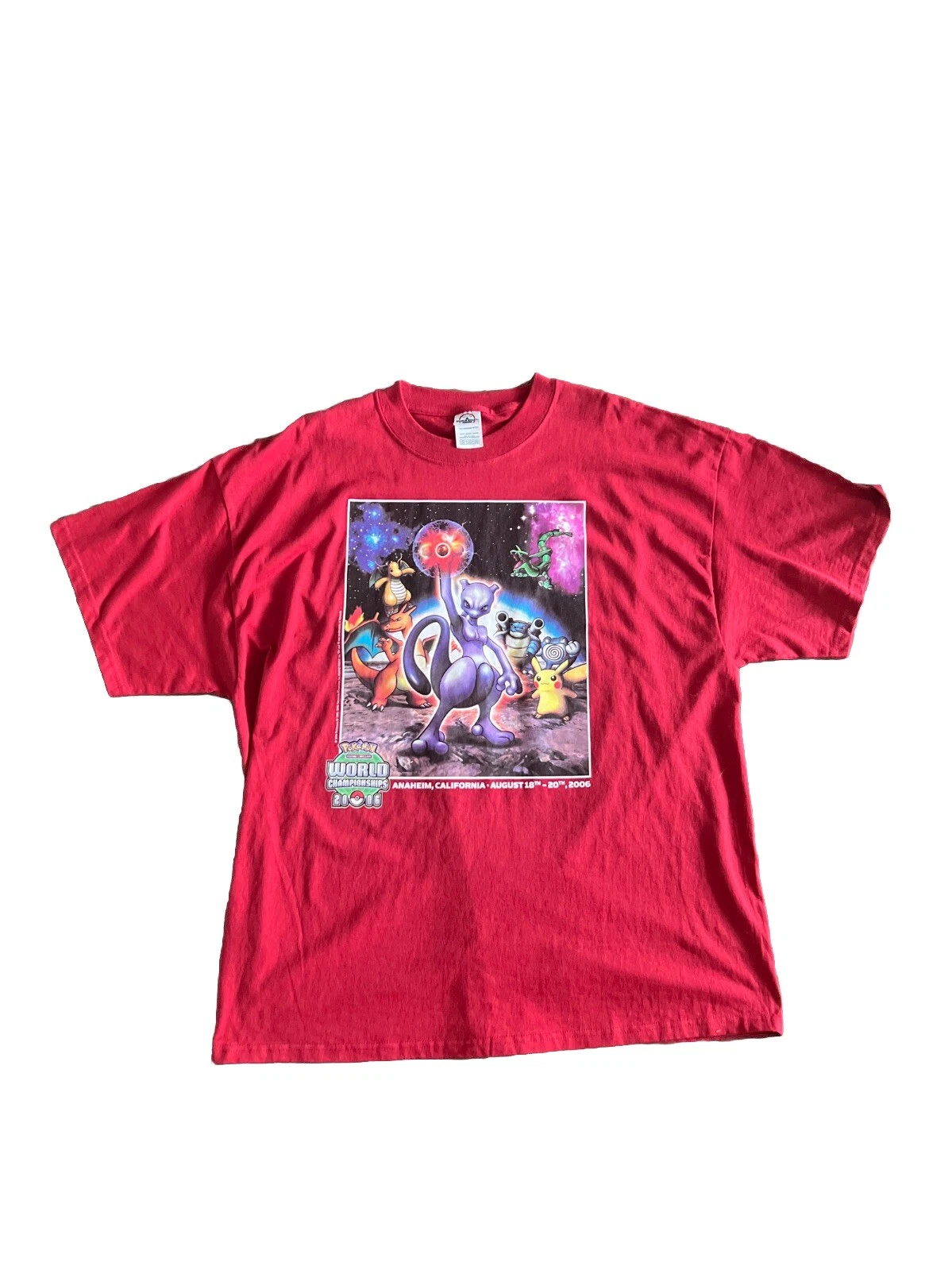
Various other pieces of merchandise was also available to competitors and spectators.
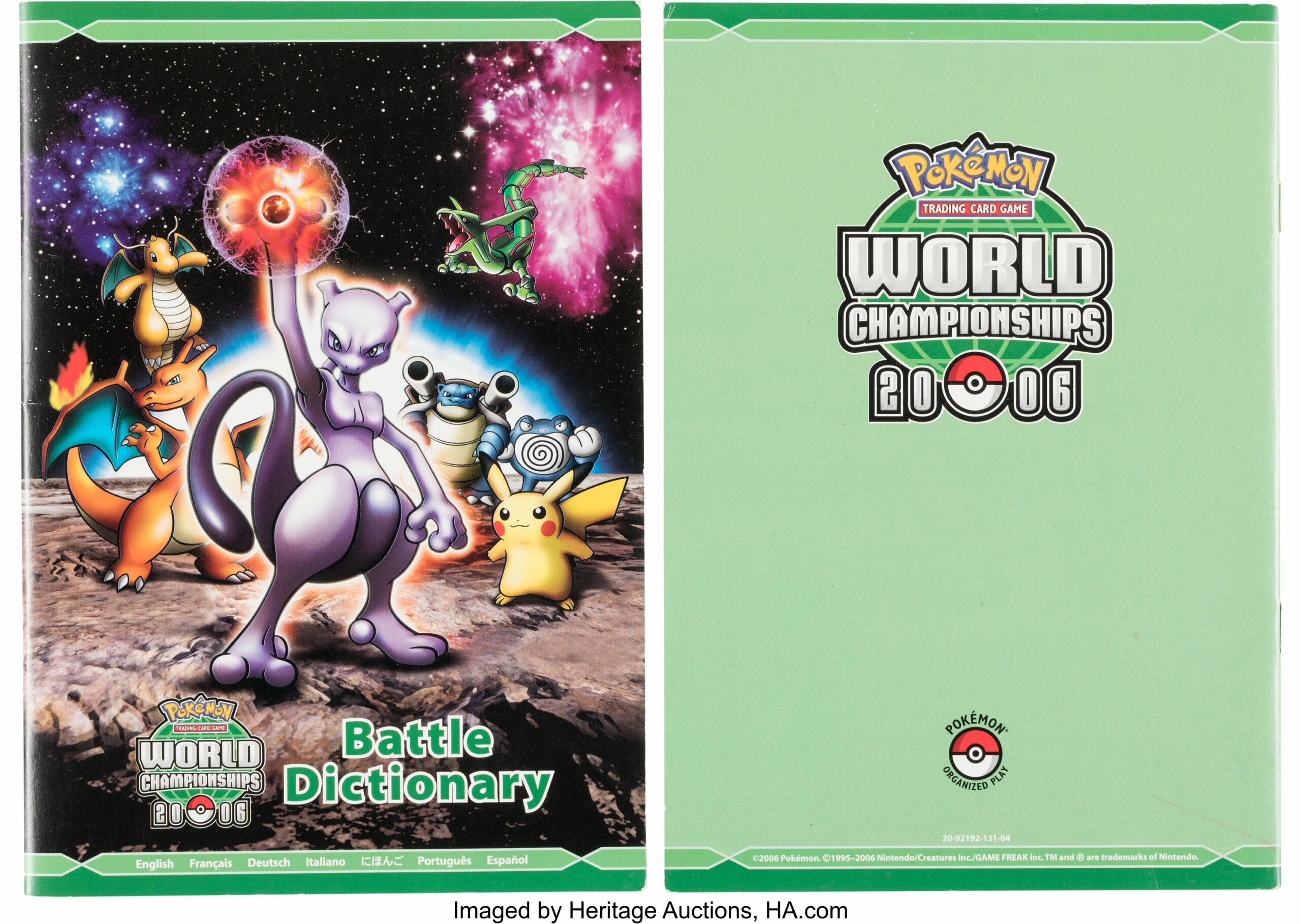
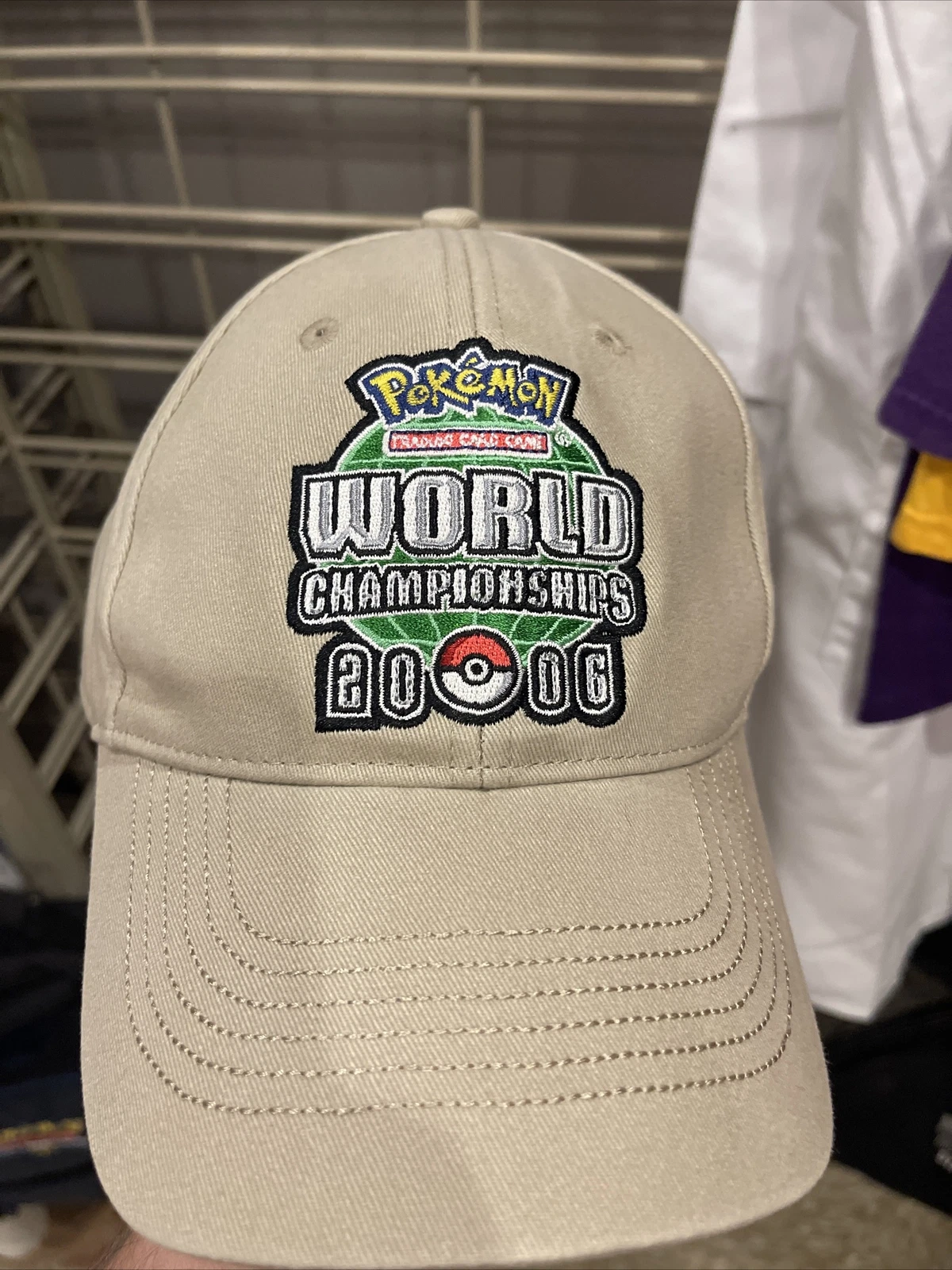
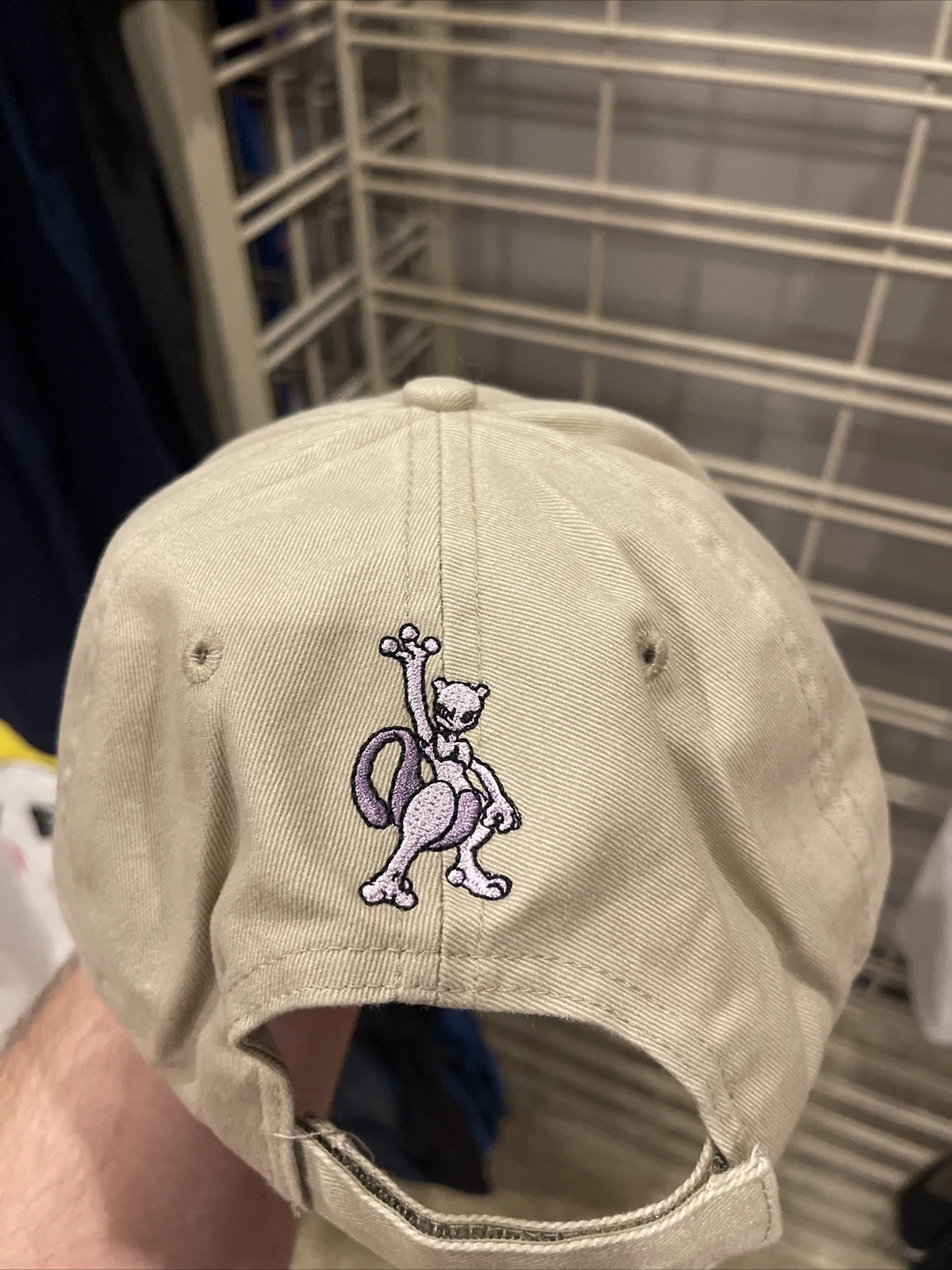
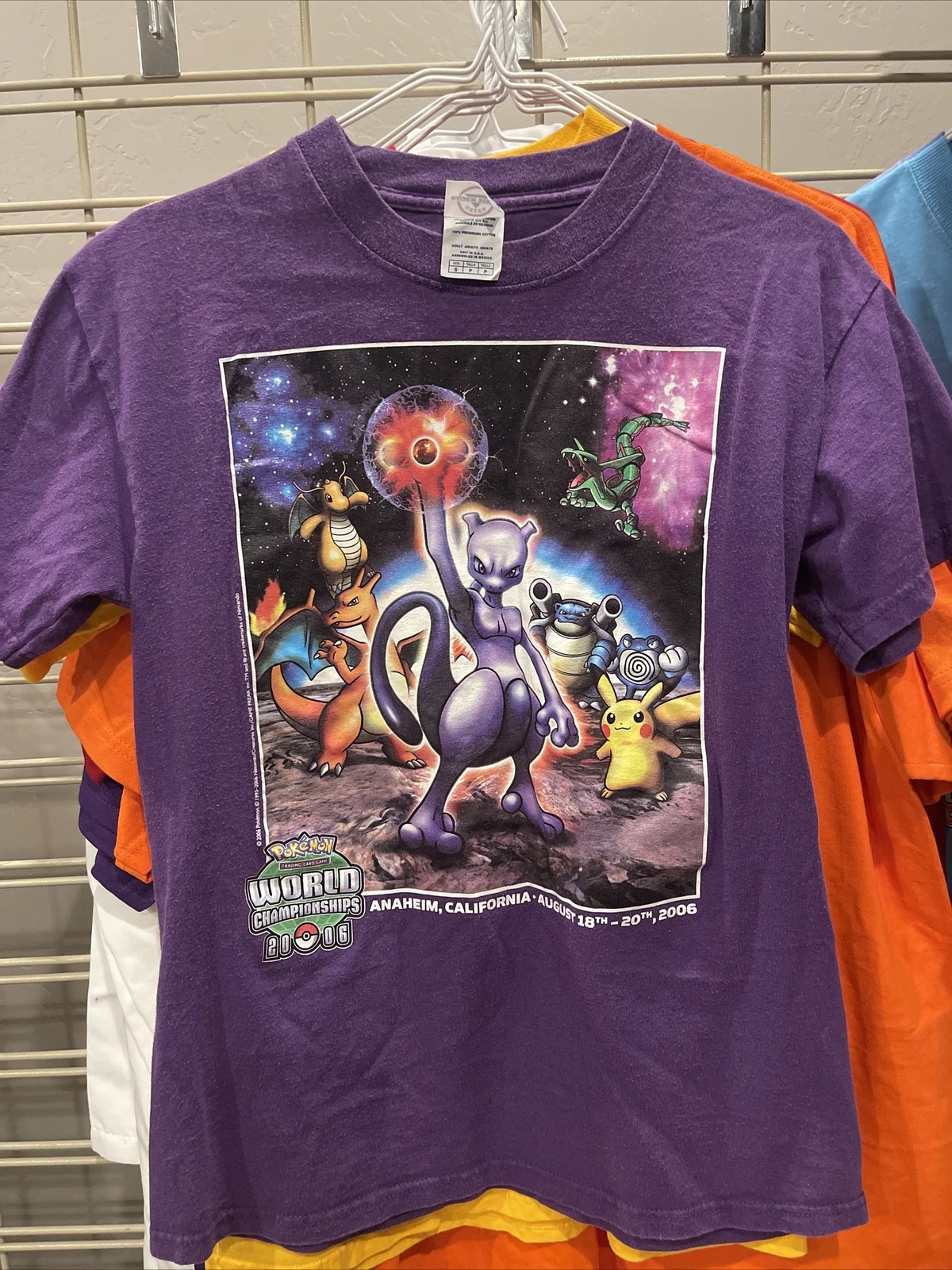
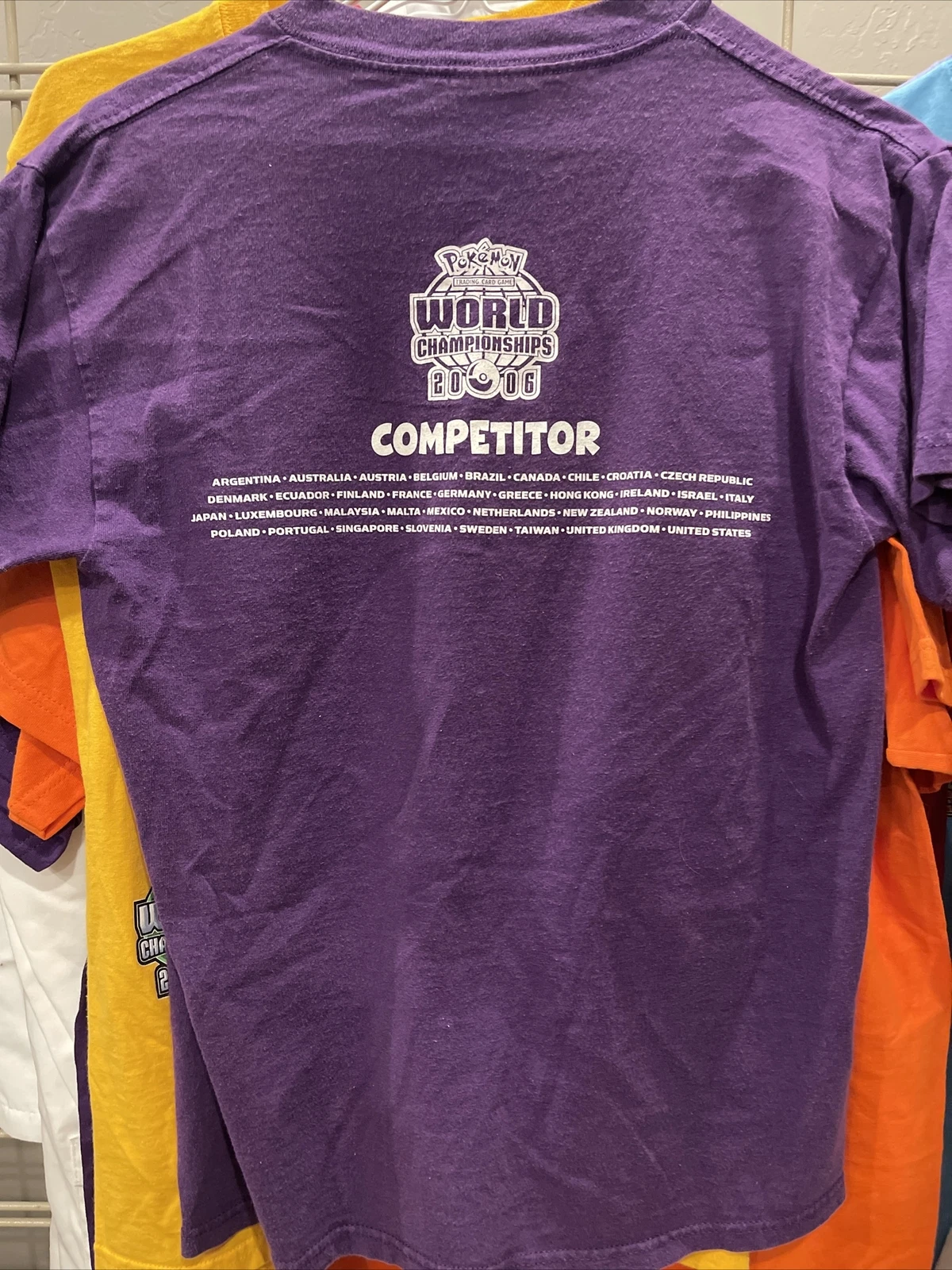
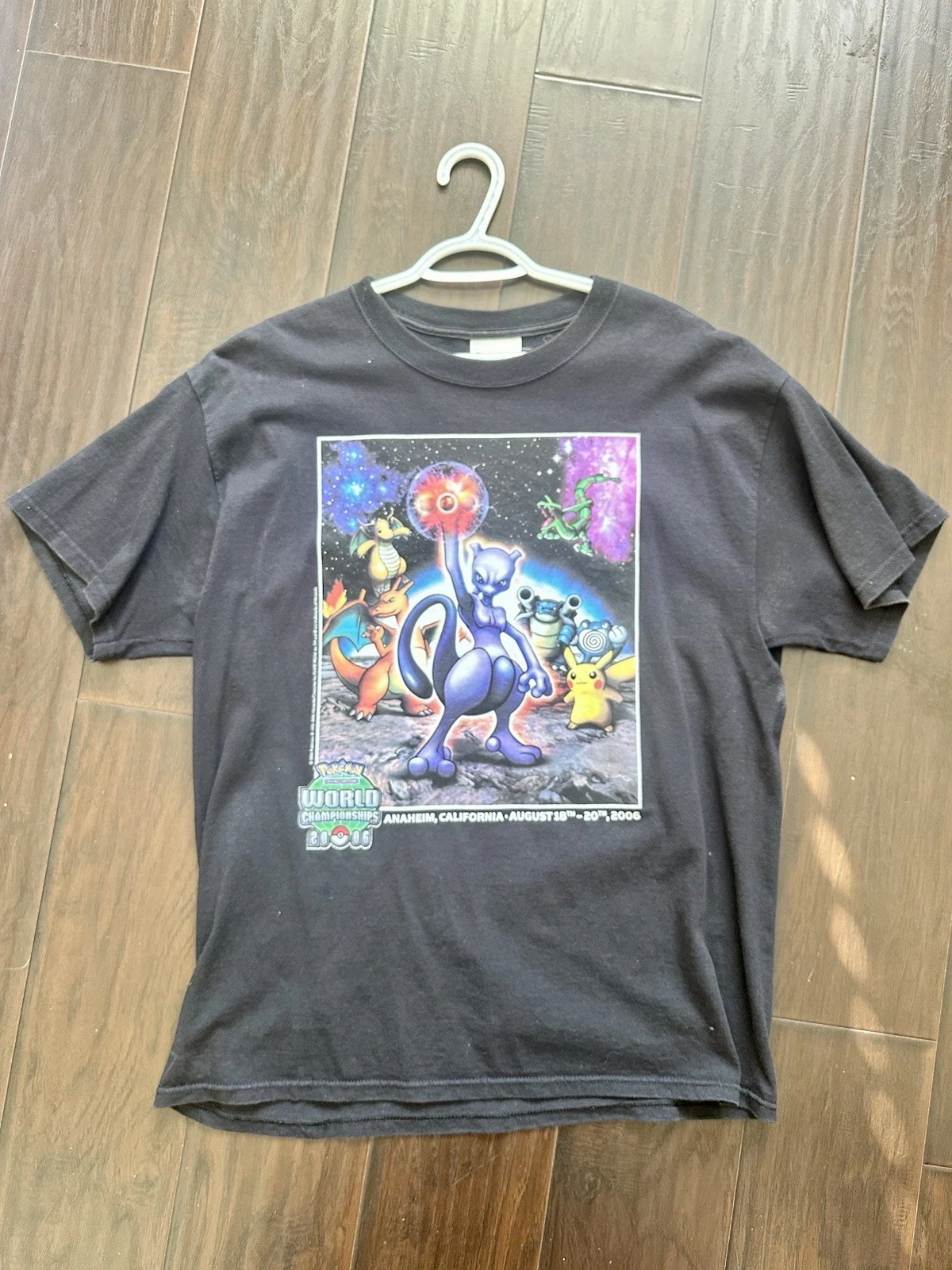
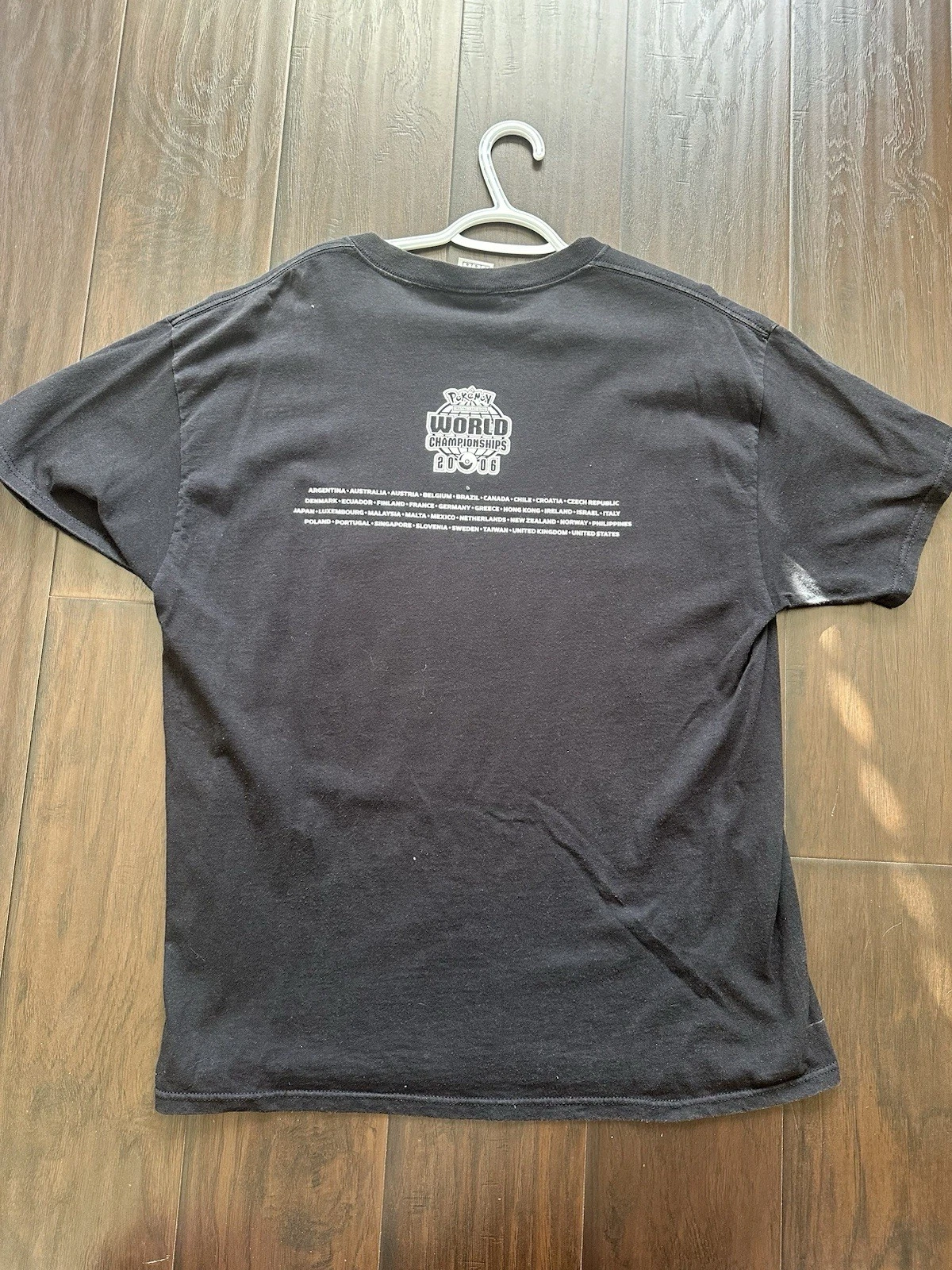
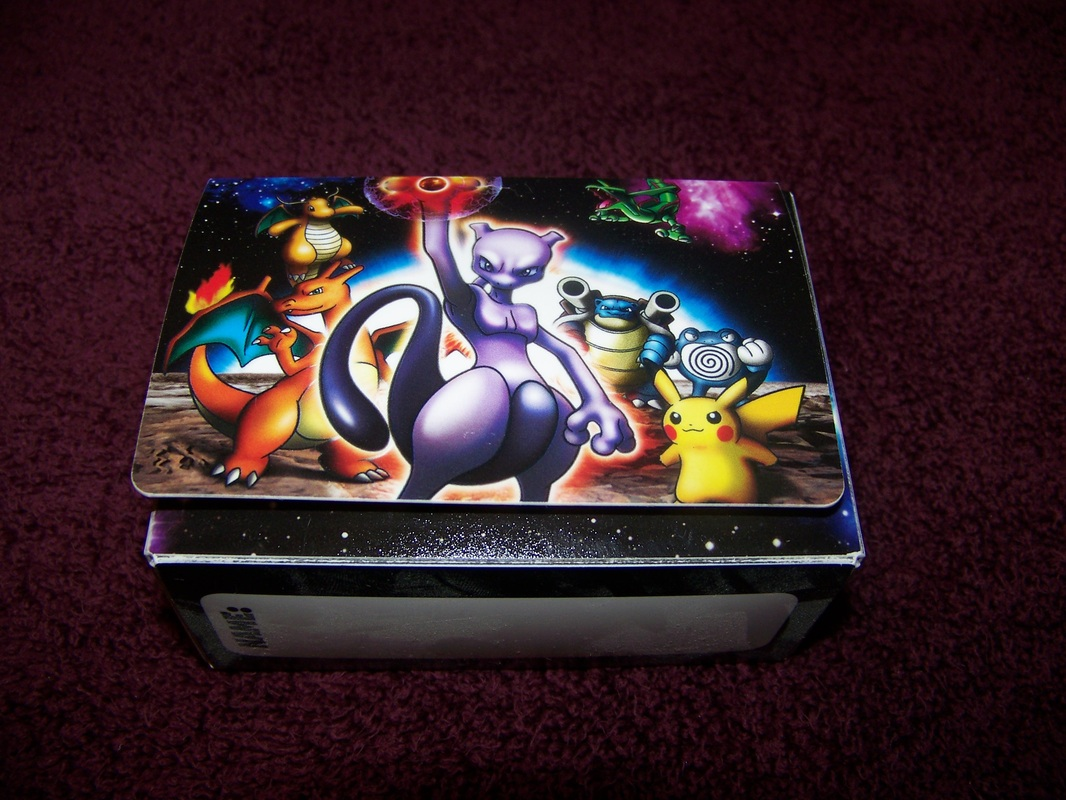
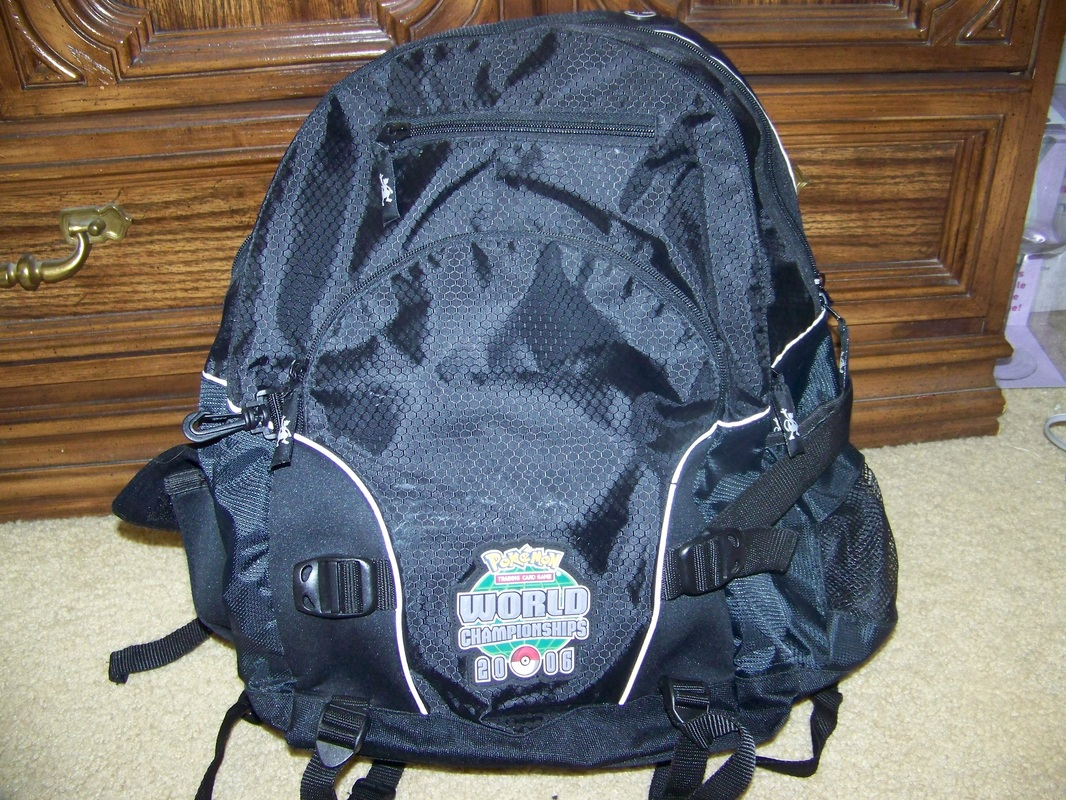
Non-Competitor Merchandise
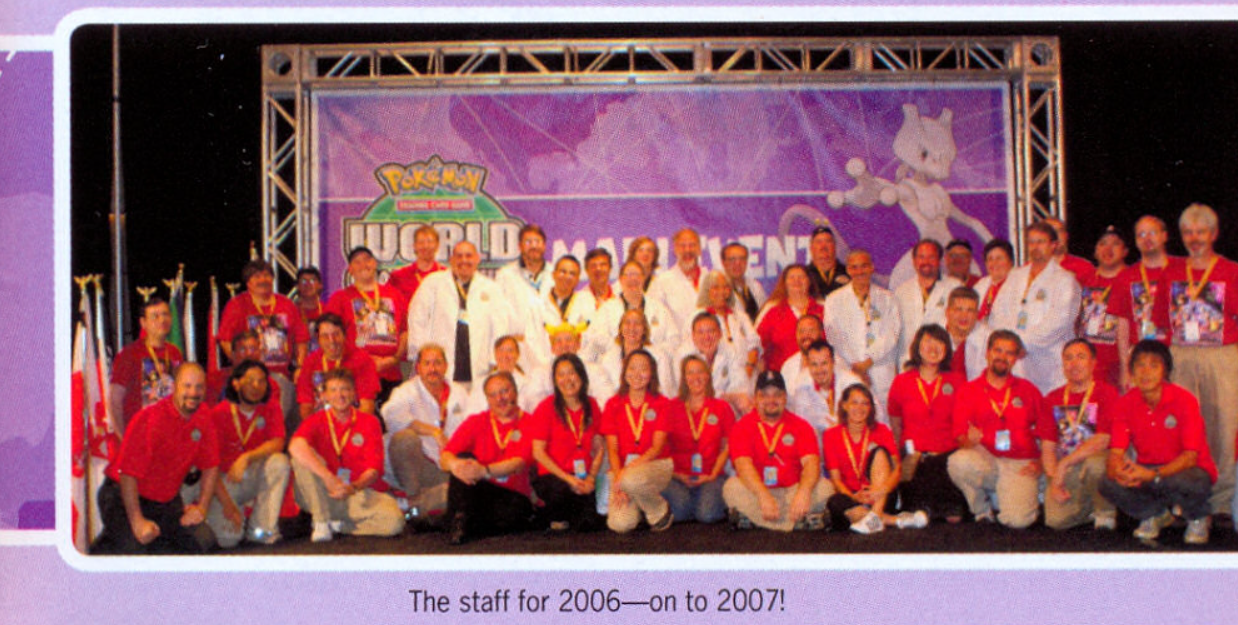
Staff members and volunteers also received merchandise, with all staff members receiving staff-stamped promo cards.
Additionally, staff had different-colored shirts depending on their roles.
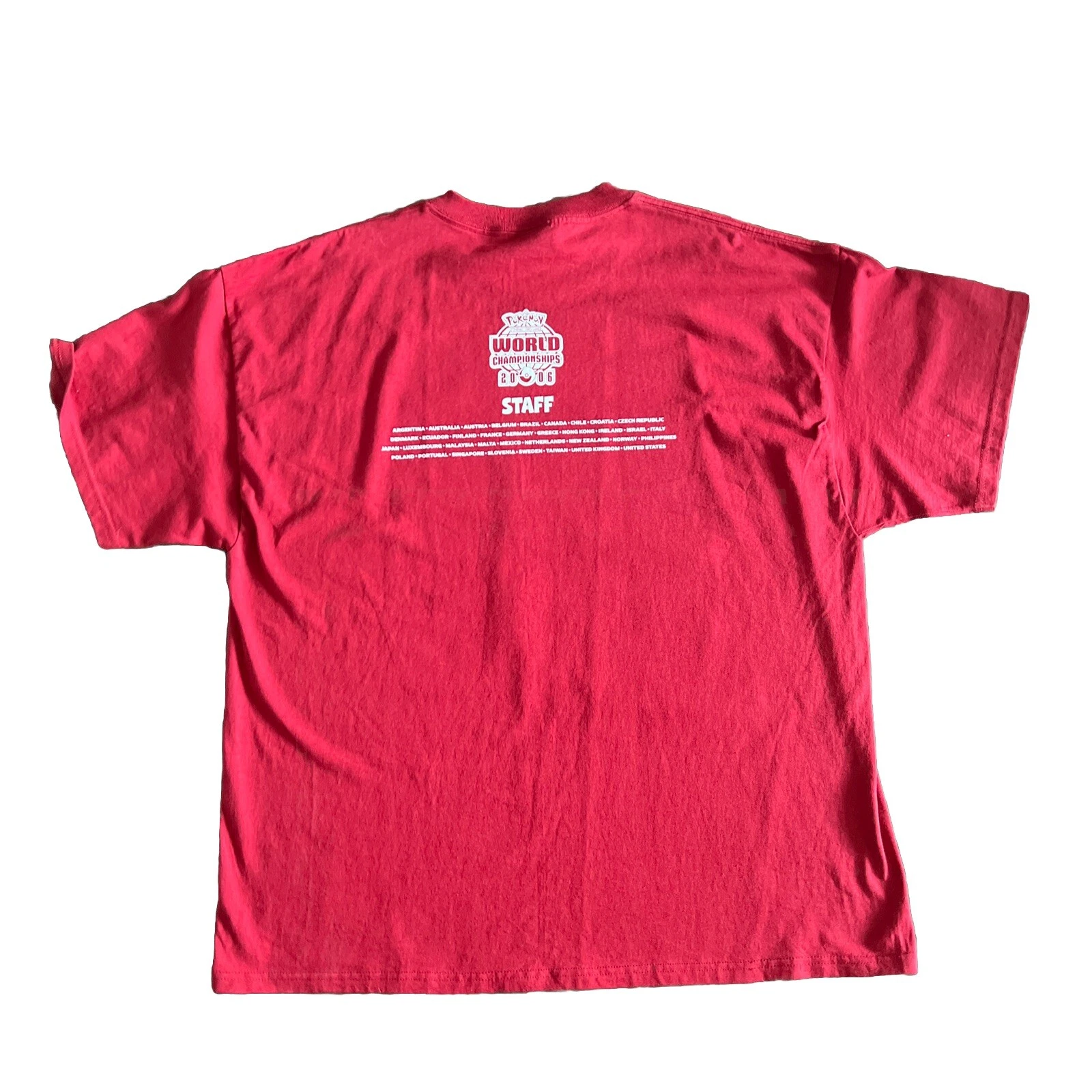
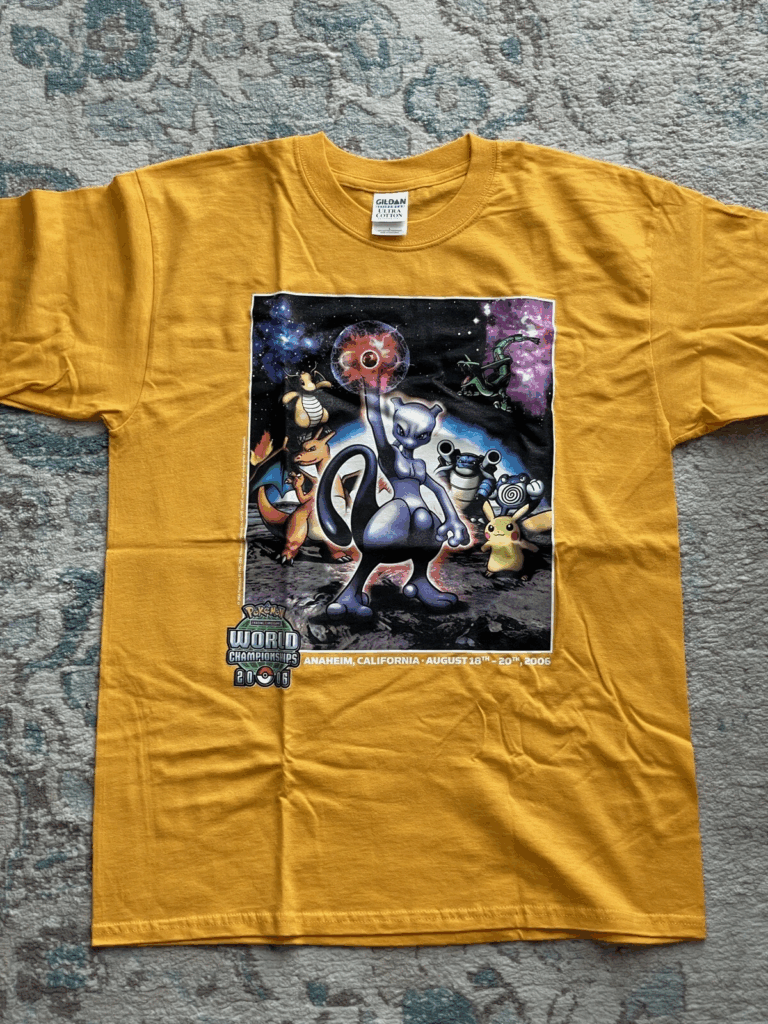
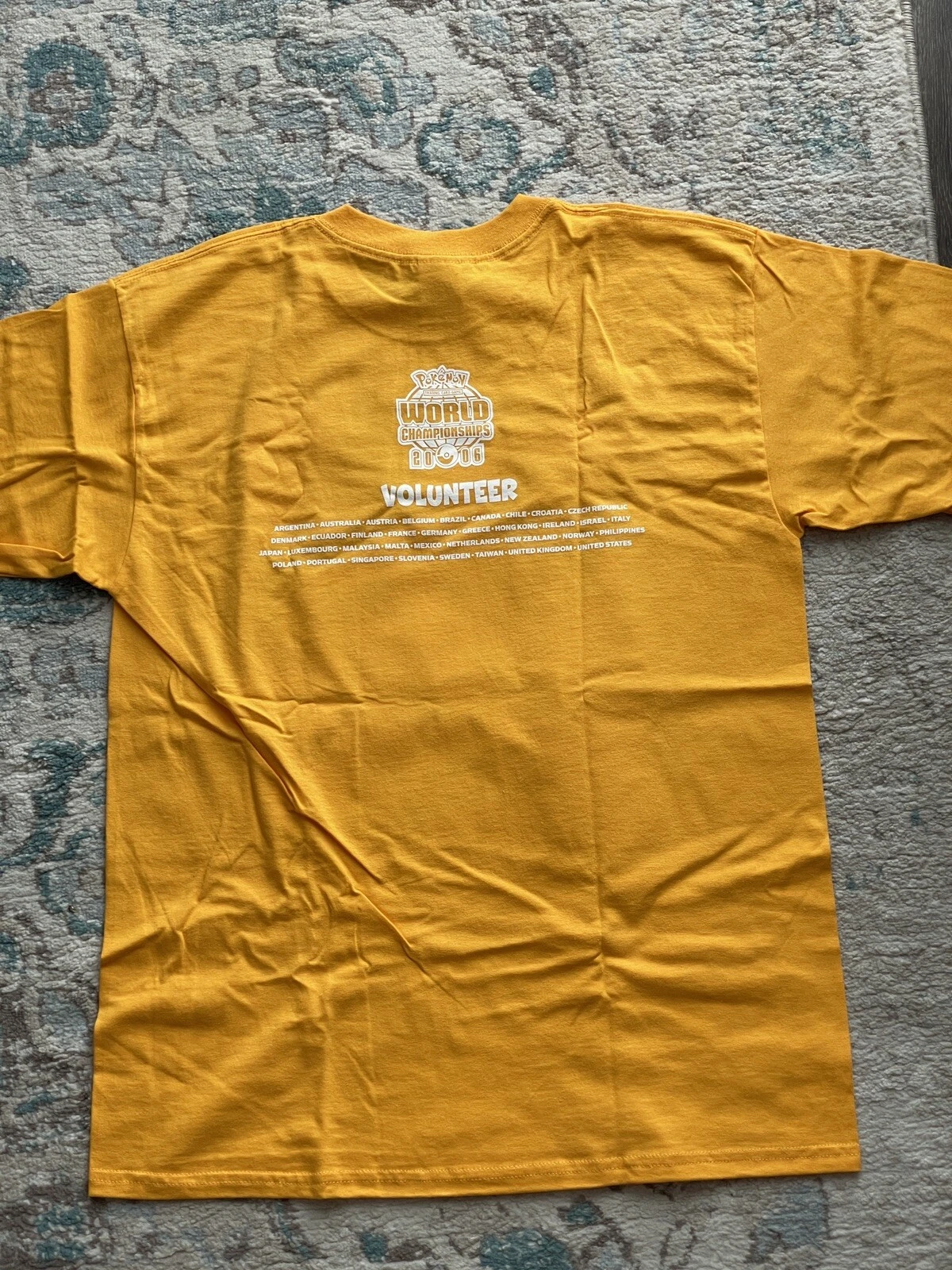
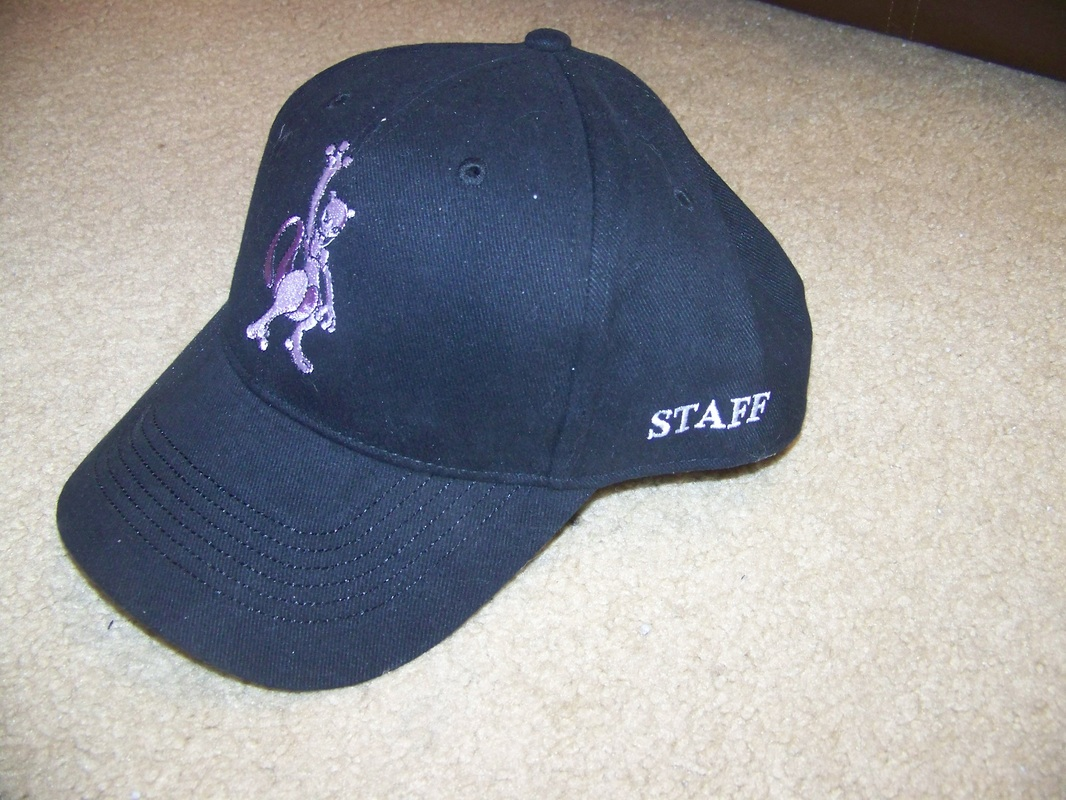
Staff members also received a black version of the Worlds 2006 baseball caps.
Tournament Structure
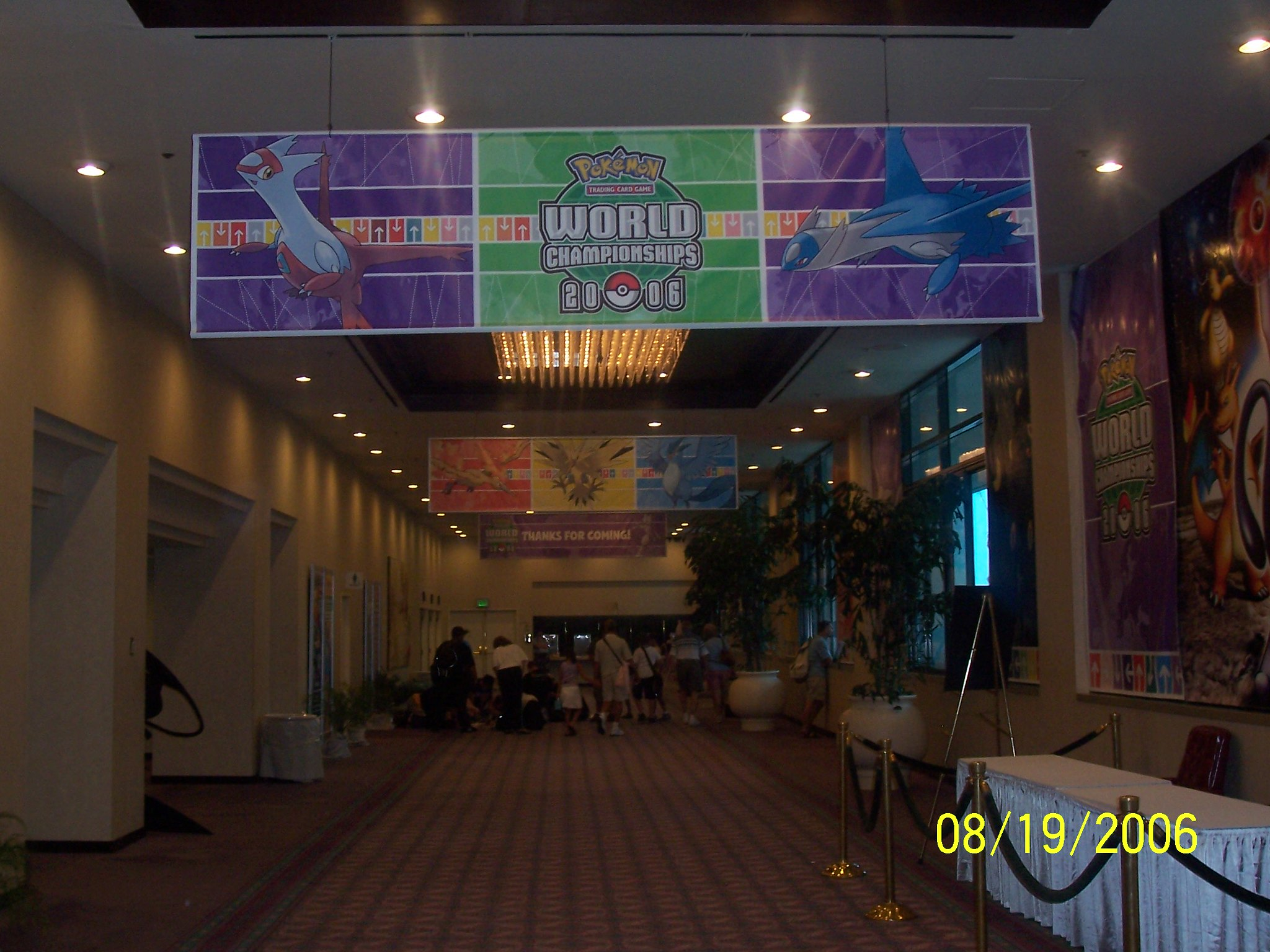
The 2006 TCG Worlds used the Modified Format with expansions from EX Hidden Legends up through EX Holon Phantoms legal for play. The tournament was divided into three age divisions: 10 and Under, 11–14, and 15 and Over (equivalent to modern Junior, Senior, and Masters divisions). Players competed in Swiss rounds (7 rounds for Juniors and Seniors, 8 for Masters), and the top 32 players in each division advanced to a single-elimination bracket to determine the champions.
Format
The follow sets were legal at the 2006 World Championships:
- EX Hidden Legends (とかれた封印 “Undone Seal”)
- EX FireRed & LeafGreen (伝説の飛翔 “Flight of Legends”)
- EX Team Rocket Returns (ロケット団の逆襲 “Rocket Gang Strikes Back”)
- EX Deoxys (蒼空の激突 “Clash of the Blue Sky”)
- EX Emerald (no direct Japanese equivalent; compiled from Gift Box Emerald, Quick Construction Packs, Master Kit, and PCG-P promos)
- EX Unseen Forces (金の空、銀の海 “Golden Sky, Silvery Ocean”)
- EX Delta Species (ホロンの研究塔 “Holon Research Tower”)
- EX Legend Maker (まぼろしの森 “Mirage Forest”)
- EX Holon Phantoms (ホロンの幻影 “Holon Phantom”)
Special sets that were also legal in the format:
- EX Trainer Kit (no direct Japanese equivalent; English/European release only)
- EX Battle Stadium (no direct Japanese equivalent; English/European release only)
- EX Trainer Kit 2 (no direct Japanese equivalent; English/European release only)
POP promotional mini-sets (legal and distributed via Pokémon Organized Play; no direct Japanese equivalents):
- POP Series 1
- POP Series 2
- POP Series 3.
Metagame
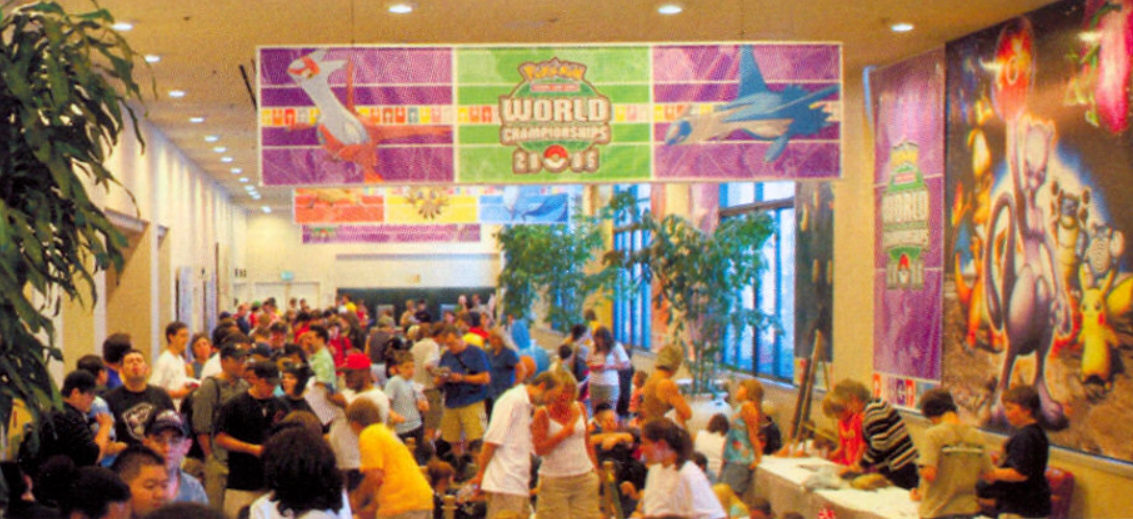
The metagame at the 2006 World Championships was defined by the clash between dominant incumbent decks and new counter-strategies.
LBS
The “LBS” deck (featuring Blastoise ex, Lugia ex, and Steelix ex) had dominated many National Championships and was heavily favored entering Worlds. LBS’s strength lay in using Blastoise ex (EX FireRed & LeafGreen) to rain multiple Energy attachments per turn, enabling Lugia ex to hit 200 damage (One-Hit KO most Pokémon) with its Elemental Blast, while Steelix ex provided tankiness and spread damage.
As expected, LBS was extremely popular – for instance, it claimed 1st, 2nd, and 3rd in the Junior division and appeared in top cuts of all divisions.
| Pokemon | Trainers | Energy |
|---|---|---|
2 Lugia ex | 11 Water Energy | |
3 Squirtle | 2 Copycat | |
1 Onix | ||
1 Latias ☆ | ||
2 Pidgeot | ||
2 Pidgey | ||
4 Plusle | ||
Lunarock
Counter-decks specifically designed to beat LBS rose to prominence at Worlds 2006. Miska Saari’s Senior-winning Lunarock deck is a prime example: Lunarock leveraged Lunatone LM and Solrock LM, whose Poké-Bodies combined to shut off all non-Lunarock Poké-Powers, directly targeting the engine of LBS (which relied on Pidgeot’s Quick Search power and Blastoise’s Energy Rain).
With additional disruption like Cursed Stone stadium (to slowly damage Pokémon with Powers) and efficient attacks, Lunarock upended the expected hierarchy by beating multiple LBS decks.
Mewtric
Another prominent anti-meta deck was Mewtric, used by Masters champion Jason Klaczynski. Mewtric’s core strategy was to establish an Item-lock using Manectric ex’s Disconnect attack as soon as turn two.
By preventing opponents from playing Trainer cards (Items), Mewtric slowed down setups and nullified many combos (for example, stopping Rare Candy, search cards, etc.). Jason’s list also ran Battle Frontier stadium to disable key Poké-Powers (like Pidgeot’s search and Magcargo’s Smooth Over) while Disconnect kept stadiums locked in play.
The inclusion of Mew ex (LM), with its versatile Versatile Poké-Power, allowed the deck to copy a variety of attacks (either from the opponent’s Pokémon or tech attackers in Jason’s list such as Roselia or Deoxys ex) to adapt to different situations. This combination of speed and disruption proved crucial in defeating slower heavy-hitters like LBS and Metanite in Masters.
Tournament Results
The event produced the first-ever European world champion in Pokémon TCG history (Finland’s Miska Saari), and also saw a Japanese player (Hiroki Yano) clinch a World Champion title for the first time in the modern era. All three finals were held on Sunday, August 20, drawing crowds of spectators and culminating in dramatic championship matches for each age division.
Junior Division (10 and Under)
In the 10 and Under division, Hiroki Yano of Japan won the World Championship, finishing with a 10–2 overall record. Hiroki defeated Spencer Duncan of the United States in the final match to claim the title. The two semifinalists were Arnoud van Bemmelen of the Netherlands and Fares Sekkoum of the United Kingdom.
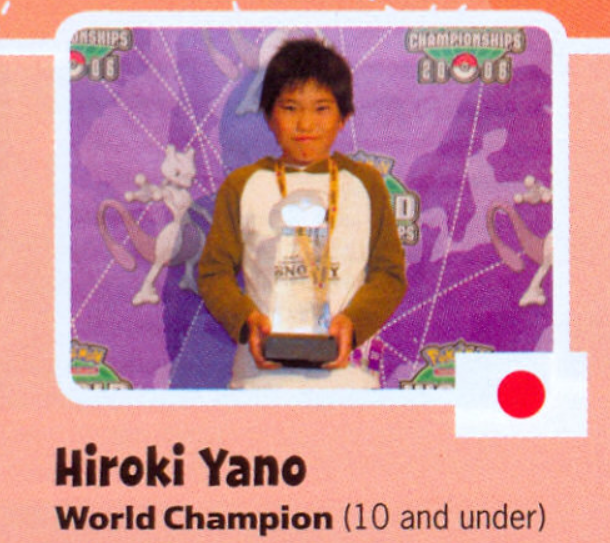
Notably, the top three Juniors all piloted the powerful “LBS” deck archetype (named for Lugia ex/Blastoise ex/Steelix ex), reflecting the dominance of that strategy in the younger division. Hiroki’s winning deck, dubbed “B-L-S,” focused on Blastoise ex’s Energy acceleration to power up Lugia ex for one-hit knockouts.
Junior Final Standings
- 1st – Hiroki Yano (Japan)
- 2nd – Spencer Duncan (USA)
- 3rd – Arnoud van Bemmelen (Netherlands)
- 4th – Fares Sekkoum (UK)
Senior Division (11-14)
The 11–14 division saw Miska Saari of Finland emerge as champion, posting a 10–2 record overall. Miska defeated David Booij of the Netherlands in the finals to become the first European player to win a Pokémon World Championship title.
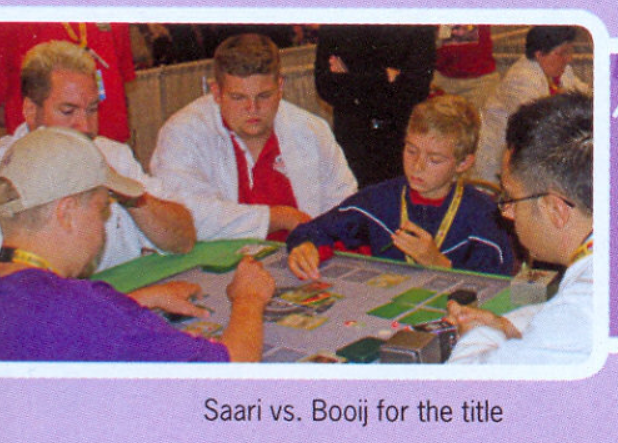
In the playoff for 3rd place, Tad Wheeler of the USA (Ohio) prevailed over Austin Reed (USA). The Senior finals featured two unconventional decks: Miska’s “Lunarock” deck versus David’s “Flariados” deck. Lunarock (built around Lunatone and Solrock) was a deliberate meta-call by Miska – he chose it to counter the popular LBS decks and indeed faced LBS in nearly every round except the final. His strategy leveraged Lunatone/Solrock Poké-Bodies to shut down opposing Poké-Powers, which gave him an edge against the many Blastoise ex decks in the field.
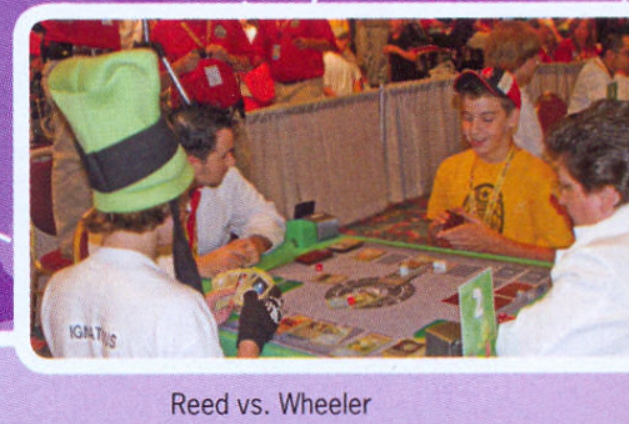
David’s Flariados deck (combining Flareon ex and Ariados from Unseen Forces) aimed to inflict Special Conditions and attack quickly with relatively low setup, catching slower decks off-guard. The semifinals had featured those archetypes upsetting more expected contenders: Tad Wheeler’s LBS deck and Austin Reed’s Ludicargo (a deck using Ludicolo and Magcargo for efficient drawing and attacking). The diversity of the Senior Top 4 reflected a shifting metagame, with counter-strategies prevailing over the once-dominant LBS.
Seniors Final Standings
- 1st – Miska Saari (Finland)
- 2nd – David Booij (Netherlands)
- 3rd – Tad Wheeler (USA)
- 4th – Austin Reed (USA)
Masters Division (15+)
In the 15 and Over Masters division, American player Jason Klaczynski of Illinois won the World Championship, the first of his eventual three career Worlds titles. Jason defeated Jimmy Ballard (also of the USA, Illinois) in the final, achieving an overall record of 11–2 at the event.
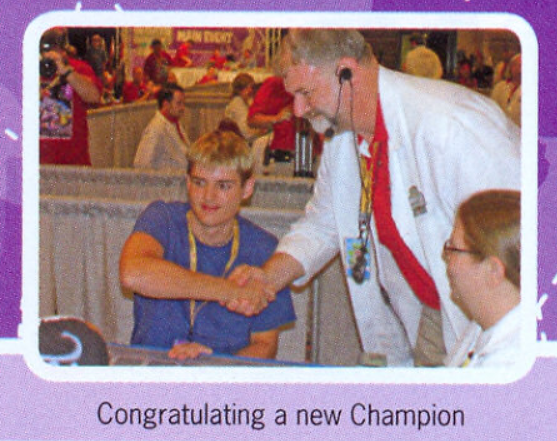
This Masters final was an all-American showdown: Jason’s innovative “Mewtric” deck versus Jimmy’s Eeveelutions deck. Mewtric centered on Mew ex and Manectric ex – its strategy was to use Manectric’s Disconnect attack as early as turn 2 to prevent the opponent from playing Item cards (Trainer lock), while Mew ex’s versatile Poké-POWER allowed it to copy a variety of disruptive attacks. By locking down Trainers and even Stadium cards (with Battle Frontier in play to shut off certain Poké-Powers), Jason’s deck could methodically dismantle the slower setups of opponents. In the finals, this strategy helped Jason overcome Jimmy Ballard’s Eeveelutions deck, which featured multiple Eeveelution ex Pokémon (such as Jolteon ex, Vaporeon ex, etc.) to exploit type advantages and surprise evolution effects.
The semifinal matches in Masters were also noteworthy. 2005 World Champion Jeremy Maron (USA) entered with a Nidoqueen/Houndoom deck – in fact, he boldly used essentially the same “Nidoqueen” deck (nicknamed “Queendom”) with which he had won the previous World Championships.
Despite that deck falling somewhat out of favor in 2006’s metagame, Jeremy’s skillful play carried him to a Top 4 finish, making him the highest-finishing defending champion in Worlds Masters history at that point in time. Jeremy was ultimately defeated in the semifinals by Jimmy Ballard, but he secured 3rd place by winning the bronze match.
The other semifinalist was Yuta Komatsuda of Japan, piloting a Metanite deck (built around Metagross δ and Dragonite δ for energy acceleration). Yuta fell to Jason in the semifinals, and he finished 4th – thoug Yuta Komatsuda would go on to become a future World Champion in a later year. Overall, the Masters Top 4 featured four distinct deck archetypes (Mewtric, Eeveelutions, Nidoqueen/Houndoom, and Metanite), highlighting the balanced variety of the 2006 metagame.
Masters Final Standings
- 1st – Jason Klaczynski (USA)
- 2nd – Jimmy Ballard (USA)
- 3rd – Jeremy Maron (USA)
- 4th – Yuta Komatsuda (Japan)
Prizes
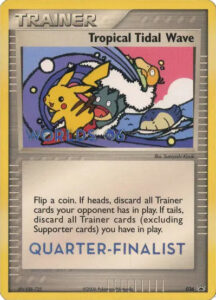
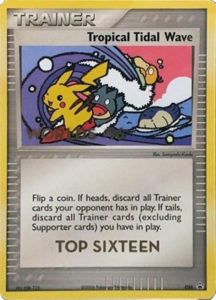
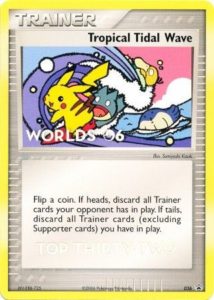
Based on their placement, top players were awarded with 2 copies of a stamped Tropical Tidal Wave card. Like the previous year, players only received cards for their placement rank. In future World Championships they would receive their placement rank and all those below as well.
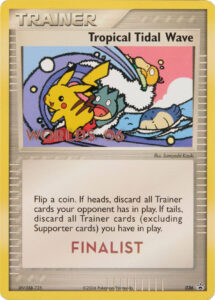
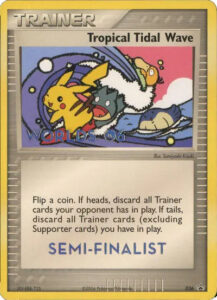
This means in total there are:
- Top 32: 192 copies
- Top 16: 96 copies
- Quarter-Finalist: 48 copies
- Semi-Finalist: 24 copies
- Finalist: 12 copies
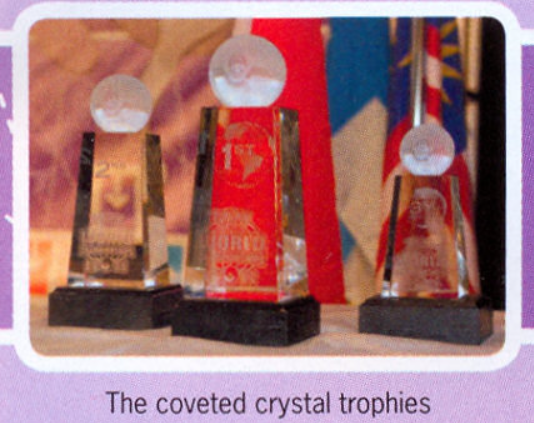
The top 3 in each division received exclusive trophy cards (No. 1, No. 2, No. 3 Trainer) as well as physical trophies made of crystal.
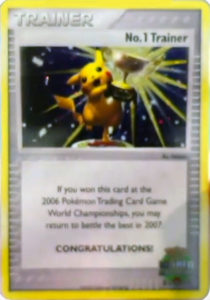
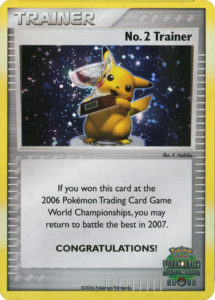
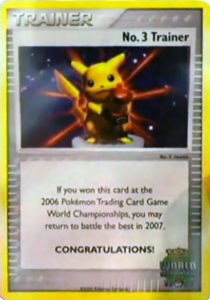
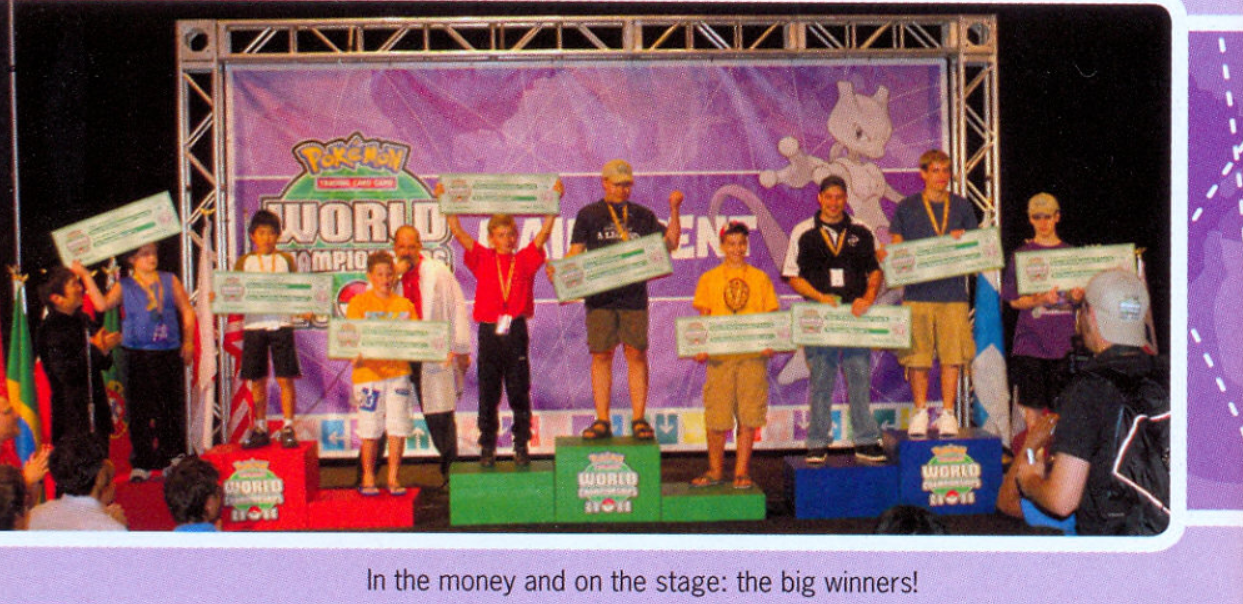
In total, over $100,000 in scholarship awards were distributed, with the champion receiving a $7,500 scholarship (and $5,000 for the runner-up, $3,500 for third and fourth). These top players also earned Travel Awards and invitations to the 2007 World Championships, along with merchandise prizes.
Legacy
The 2006 Pokémon TCG World Championships is remembered as a turning point for both competitive play and the event’s global identity. It crowned milestone champions—Jason Klaczynski’s first Masters title (on the way to a record three) and Finland’s Miska Saari becoming the first European world champion—signaling that the skill ceiling and geographic center of excellence had broadened. Metagame-wise, Anaheim is the classic case study in anti-meta disruption trumping raw power: lock and denial strategies like “Mewtric” and Lunarock successfully targeted the year-long favorite LBS, yielding a Top Cut that showcased diverse archetypes and informed how elite players prep for known fields (tempo control, ability denial, and matchup-targeted tech).
Structurally, 2006 solidified the modern Worlds weekend: invite-driven fields by region and rating, capped by a Friday Last Chance Qualifier that fed clean, age-bracketed championship brackets—an organizational template repeated for years.