

Pokémon Battle Carnivals were a seasonal series of large-scale Pokémon events organized by The Pokémon Company in Japan. These events primarily focus on the Pokémon Trading Card Game (TCG) and serve as official tournament gatherings, often doubling as qualifiers for the Pokémon World Championships. They were previously held in the spring and Autumn in 2011 and 2012.

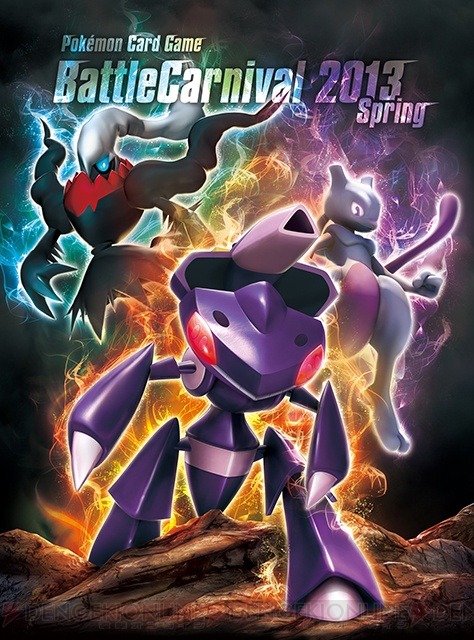
In 2013, the Battle Carnival was held as a spring tour across multiple Japanese cities in May, drawing thousands of players and fans to celebrate Pokémon through TCG battles, side games, and exclusive merchandise. No separate autumn “Battle Carnival” was held in 2013; a Battle Festa event took place later that year in its place. This would be the final Battle Carnival that was held, and was one of the last major tournaments of the BW era.
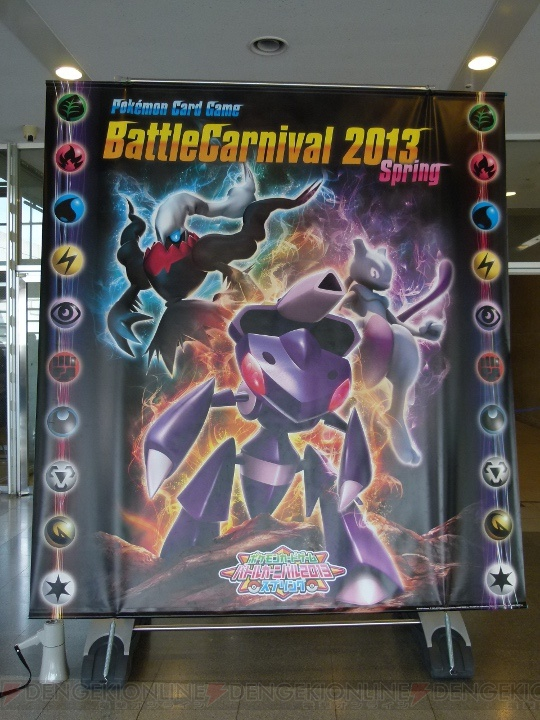
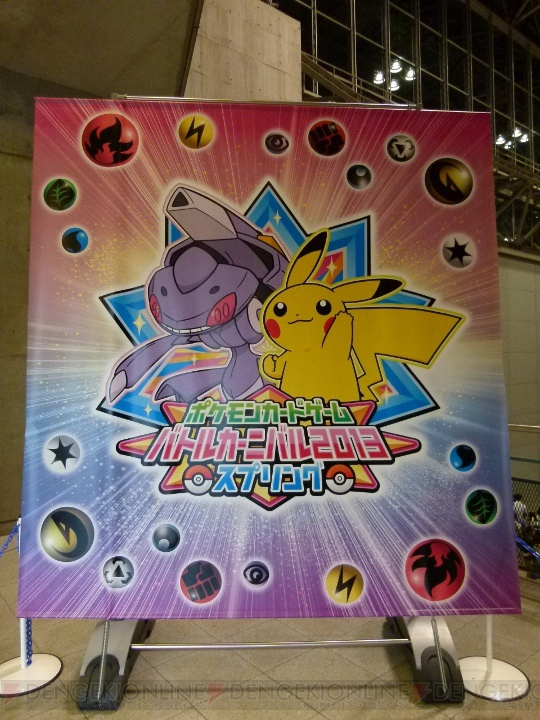
The 2013 Pokémon Card Game Battle Carnival Spring took place at four venues across Japan:
- Fukuoka – Fukuoka International Congress Center (Multi-purpose Hall) on May 4, 2013
- Nagoya (Aichi) – Nagoya Trade & Industry Center (Fukiage Hall) on May 12, 2013
- Chiba (Tokyo Area) – Makuhari Messe, Hall 1, on May 18–19, 2013 (two-day event)
- Osaka – Intex Osaka, Hall 3, on May 26, 2013
Each stop was a full-day event (typically 9:00–17:00) featuring the same programming and tournaments. Notably, the Chiba stop at Makuhari Messe spanned two days due to the high expected turnout in the Tokyo metropolitan area. Admission was free, and players of all ages could participate in various activities.
World Challenge Tournament
At the heart of each 2013 Battle Carnival was the World Challenge Tournament, an official Pokémon TCG competition with invitations to the 2013 Pokémon World Championships (held in Vancouver) on the line. This tournament was split into two age-based divisions: A League for junior players (born 2002 or later) and B League for senior/master players (born 2001 or earlier).
Similar to previous years, the main TCG tournament had players play through 3 stages, each winnowing down the field of competition. All players who participated in the tournament received a Mew promo card, stamped with the event logo.
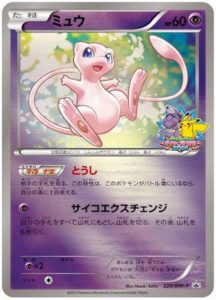
Challenge Stage

In this stage, players would pair up against each other have have to win 4 consecutive times to advance to the Premier stage. This was changed from 2011 and 2012 Battle Carnivals, where the Challenge Stage only required 3 wins to advance from.
Premier Stage

Unlike previous years where the Premier Stage was a timed event and players tried to get the highest number of consecutive wins, the 2013 event grouped players into 4-player single elimination pods. The winner of that pod would advance to the final Climax stage. Once all the spots in the Climax Stage had filled up on a first-come, first-server basis, the final stage would begin.
All players who reached this stage received another promo card with the event stamp.
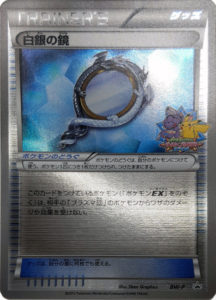
Climax Stage
The final stage was a single-elimination bracket to determine the winners, with all matches being best-of-one games. Tournament staff provided live coverage on venue monitors so spectators could watch the top matches in real time.
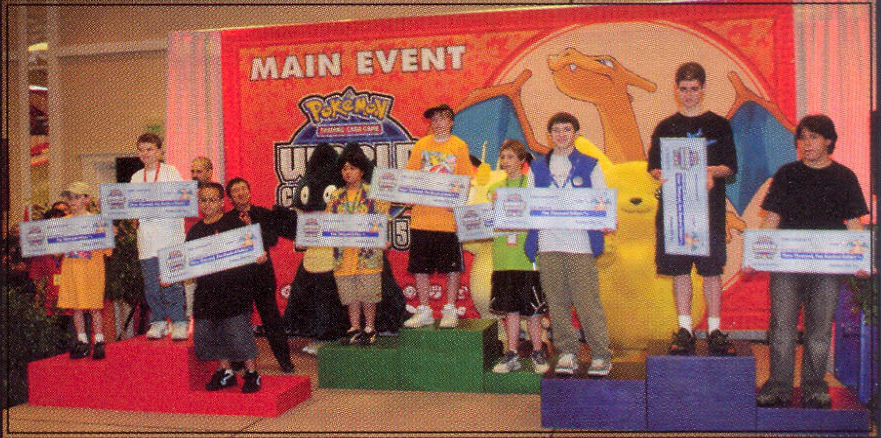
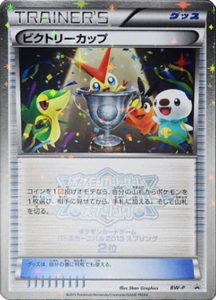
Winners were awarded Victory Cup promo cards in acrylic displays similar to previous years, but with the new 2013 event logo.
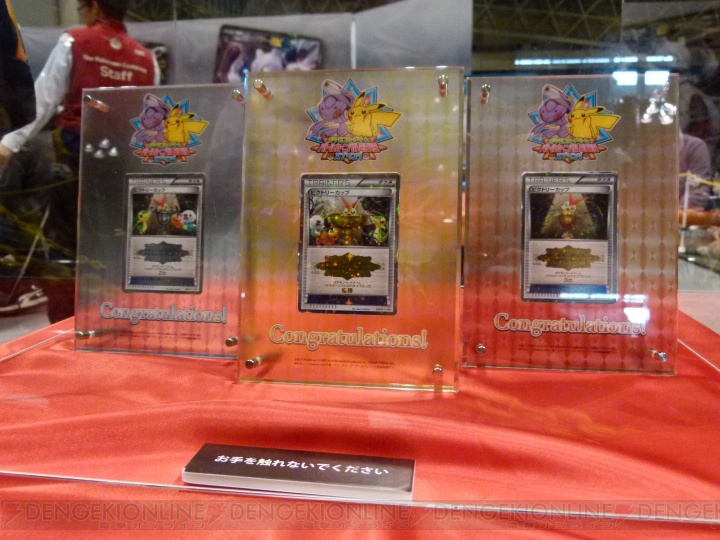
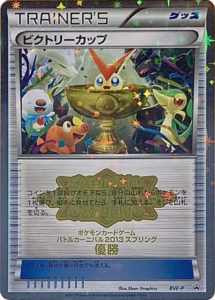
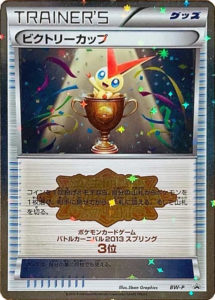
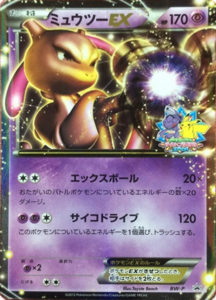
Additionally, the top 3 winners of each age division received an alternate art Mewtwo EX card with the event stamp. They also received an invite to the 2013 Pokemon World Championships.
Side events
Beyond the main tournament, Battle Carnival 2013 offered a wide array of side events, free-play areas, and attractions to engage fans of all ages and skill levels.
PokeCard Point System
To encourage participation across the venue, a new PokéCard Points system was established in 2013.
Points were awarded for playing in side events and winning matches. Players could accumulate these points and redeem them for exclusive prizes. Even just joining battles earned points, promoting a friendly, welcoming competition. For example, a win in certain side events might grant multiple points, while a loss still gave a point for trying.
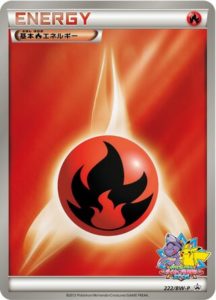
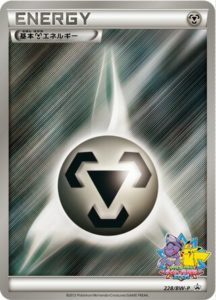
Prizes ranged from collectible cards to memorabilia. Basic Energy cards. Special glossy versions of Grass, Fire, Water, Lightning, Psychic, Fighting, Darkness, and Metal Energy with the Battle Carnival 2013 Spring logo cost 1 point each to redeem.

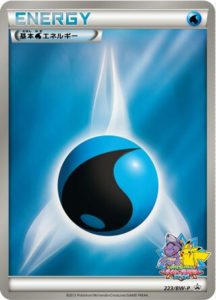
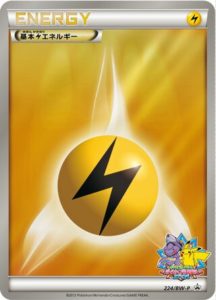
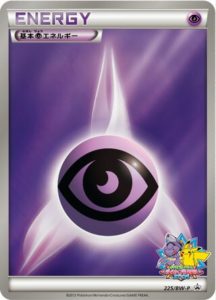
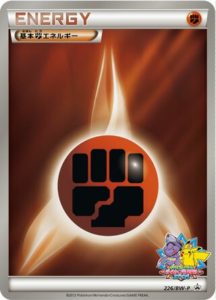

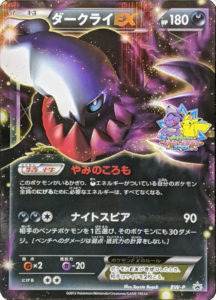
A highlight prize was the Darkrai-EX promo card, which required a larger amount of points – it was a 10-point prize featuring alternate artwork.
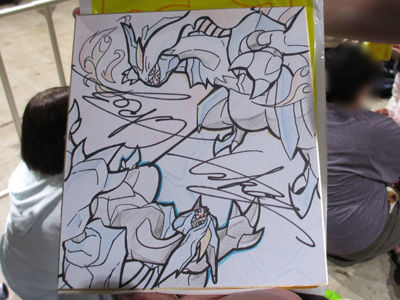
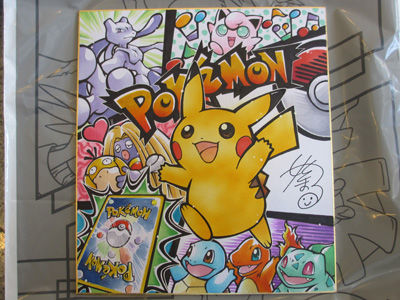
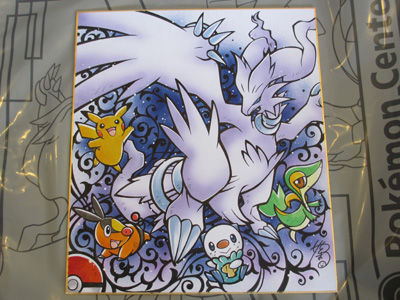
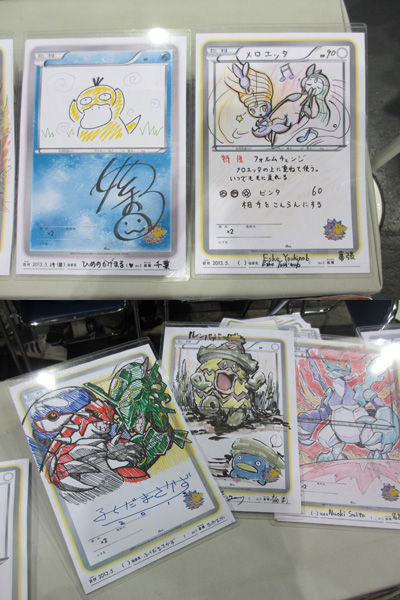
Lastly, multiple Pokemon TCG illustrators were present at the event to sign cards for attendees. At the Chiba venue for example, Kagemaru Himeno and Eske Yoshinob were at the event. Midori Harada was at the Fukuoka venue, and Naoki Saito was at another location.
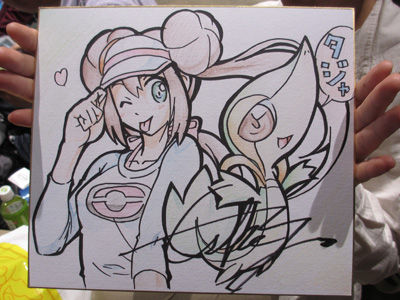
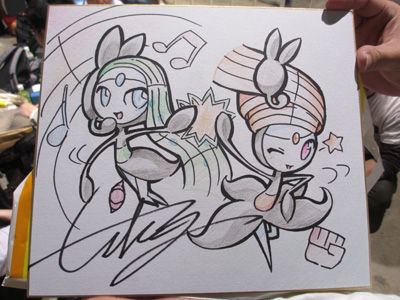
Prior to the event opening, each had made around 5 custom shikishi art boards that could be exchanged for 20 PokeCard points on a first-come, first-serve basis. These were very coveted prizes, with almost all of them being claimed by 9:00 in the morning.
3-on-3 Battle
This was a three-player team battle event. Teams would play until they reached 3 wins or lost.
- Participation Prize: 1 PokeCard point
- For each win: 2 PokeCard points
- For 3 consecutive wins: 3 PokeCard points as a bonus
Limited Battle
There was also the “Limited Battle” format in which decks could not include any Pokémon-EX cards. This EX-free format leveled the playing field and “tested true skill” by removing the era’s most powerful cards.
- Participation Prize: 1 PokeCard point
- For each win: 2 PokeCard points
- For 3 consecutive wins: 3 PokeCard points as a bonus
One-Day Battle
A casual free-play area called “One Day Battle” allowed participants to battle all day at their own pace. This area was divided into Junior League (elementary school players and below) and Open League (open to all ages) so younger children could play in a comfortable environment. Players could hop in and out of matches, trying to rack up as many wins as possible throughout the day.
- Participation Prize: 1 PokeCard point
- For each Junior league win: 1 PokeCard point
- For each Open League win: 2 PokeCard points
Challenge Gym Leaders and Team Plasma
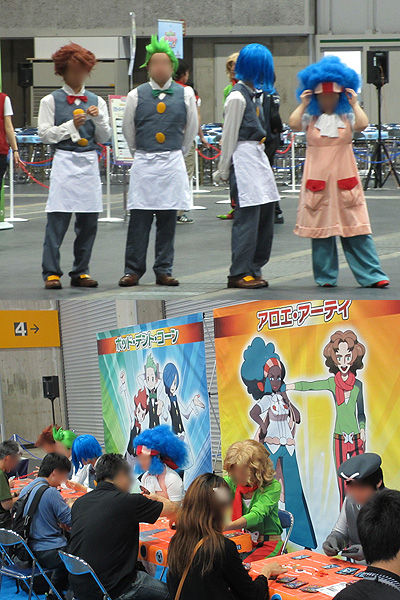
A special battle corner where attendees could duel against event staff posing as Gym Leaders or Team Plasma members. Impressively, among the staff were notable players such as a 2012 World Championships Junior Division finalist, giving challengers a chance to test their skills against top talent.
- Participation Prize: 1 PokeCard point
- For each win: 2 PokeCard points
Illustration Exhibits
To celebrate the artistry of the TCG, the events included a gallery of original card artwork and illustrations from the Pokémon Card Game BW era.
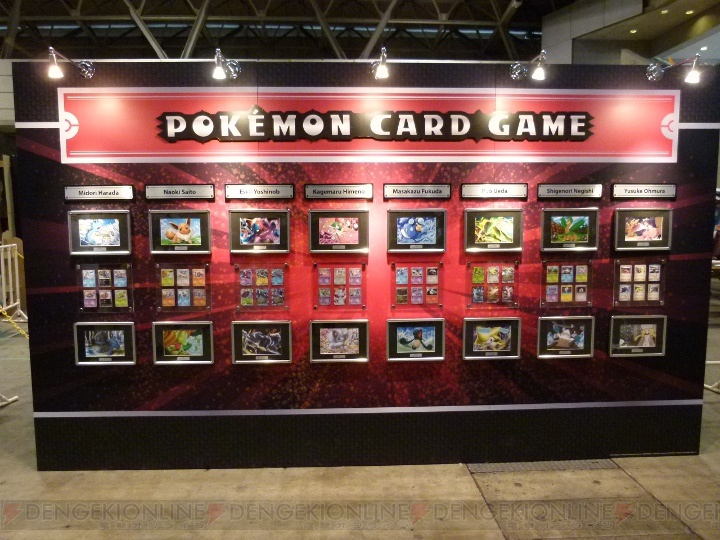
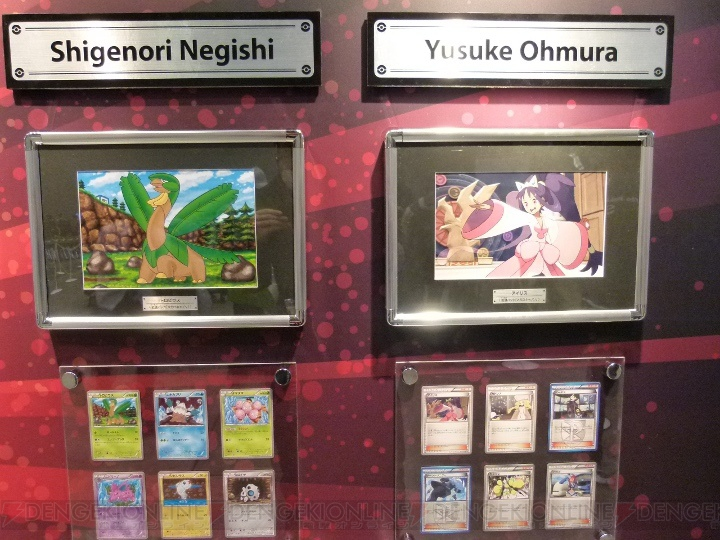
Attendees could see blown-up prints of card art and even some original sketches, showcasing the detail that goes into card design. In addition, each venue hosted an illustrator autograph session featuring a renowned Pokémon TCG artist. These guests varied by location – for example, Midori Harada (illustrator of cards like Mew and Serperior) appeared in Fukuoka, Naoki Saitō (illustrator of the Mew promo card and many others) in Nagoya, Eske Yoshinob in Chiba (Day 1), Kagemaru Himeno in Chiba (Day 2), and Masakazu Fukuda in Osaka.
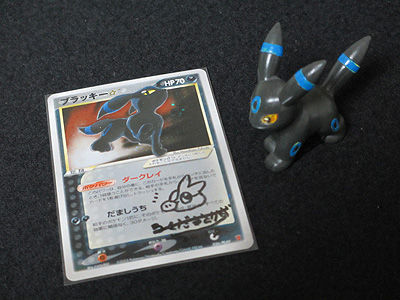
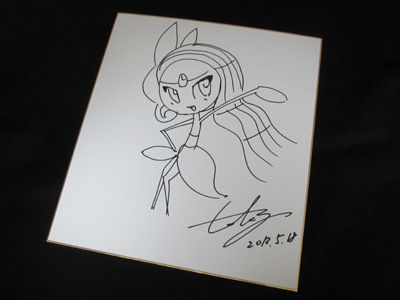
Fans could line up to meet the artist and get cards or shikishi (signboards) signed. The illustrator booths were a major draw, often running out of time due to the number of enthusiasts in line.
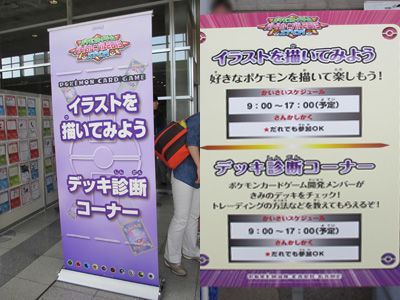

For younger children, there was also an “Illustration Drawing Corner” outside the main hall where they could sit down and draw their own Pokémon cards or color in provided line-art sheets. Several of the visiting Pokemon Illustrators also illustrated example cards to inspire attendees.

Deckbox promotion
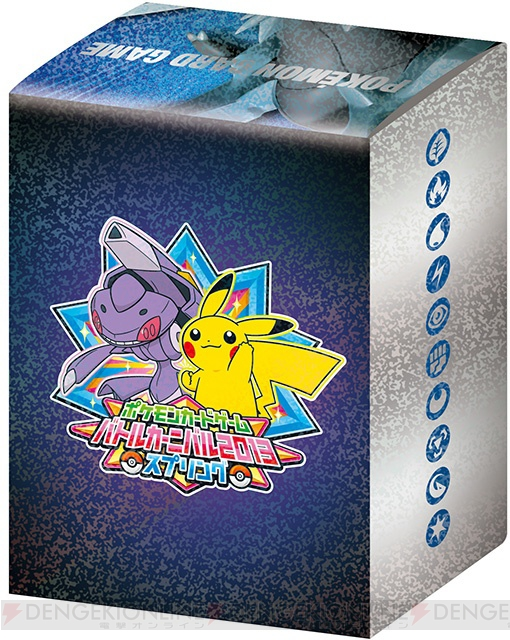
One unique promotion in 2013 allowed players who purchased or brought the pre-constructed deck “Strongest Deck 60: Blastoise + Kyurem-EX Combo” to receive a free original deck case at the event. This deck case featured the Battle Carnival 2013 Spring artwork and was a shiny, holo-foil design. Supplies were limited, so this giveaway spurred many attendees to bring that deck along.

Legacy
The 2013 Pokémon Battle Carnival Spring was hailed as a big success, with enthusiastic attendance at each city and positive feedback from participants. It effectively combined a high-level competitive tournament with the fun of a Pokémon festival, staying true to its “Carnival” name.
The event’s structure – a mix of serious competition, casual play, and family attractions – helped broaden the appeal of the Pokémon TCG in Japan. Several players from these events went on to perform excellently at the 2013 World Championships (for example, junior champion Yūgo Satō finished as World runner-up in his division).
After 2013, the “Battle Carnival” branding was retired as the Pokémon TCG event circuit evolved – in 2014, a similar spring tournament series was held under the name Lizardon Mega-Battle, followed by other “Mega-Battle” and later Champion’s League events in subsequent years. However, the spirit of the Battle Carnival lives on. It demonstrated the value of combining competition with community-centric fun, a format that The Pokémon Company continues to use for its major events.